



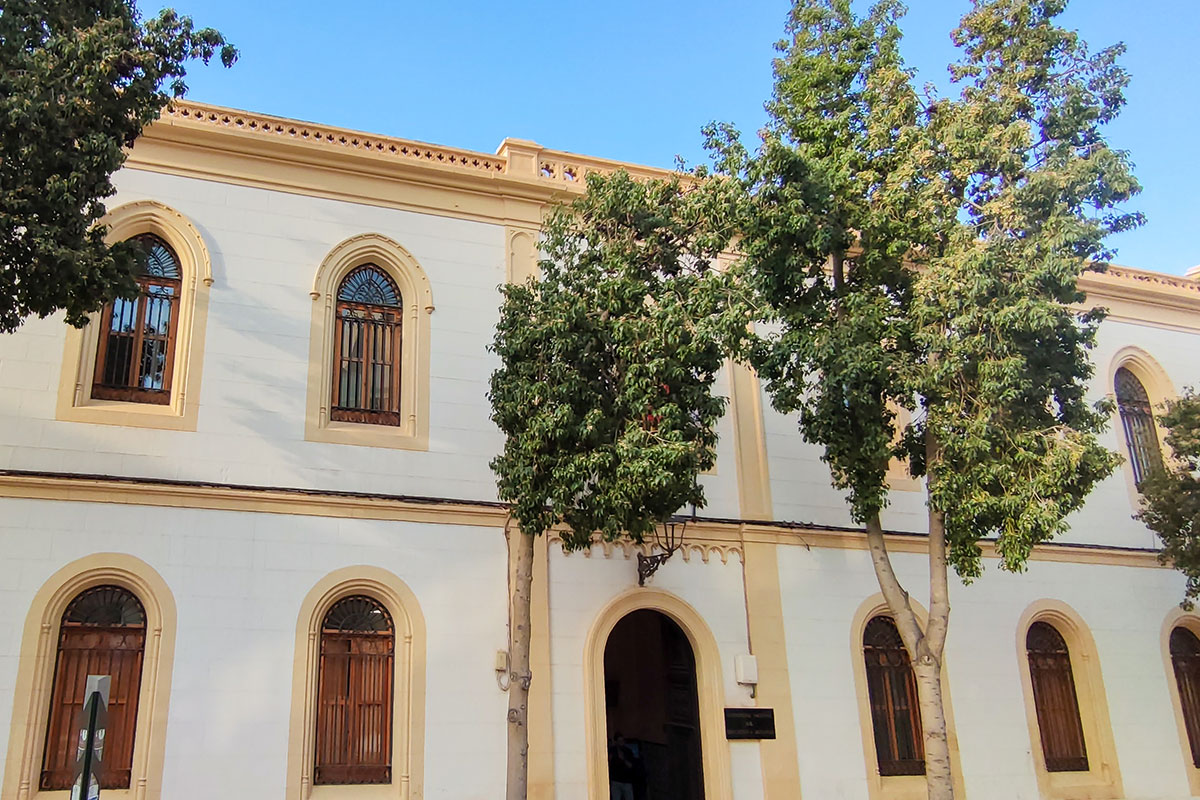
Old school of La Purisima
The only school that survived the seizure was that of the Purisima, adopting the stage of the Restoration, the mid-nineteenth century, teaching and way of life, often in religious communities after being dispossessed of their property. For this purpose a building for school on land owned is built, south of the present place of San Fernando (now Plaza de la Administration Vieja) and, with some reforms, it has survived to this day.
Work began in 1885, under an initial draft of Trinidad Cuartara Casinello, and were directed by the architect Ortiz de Villajos. It opened in 1889. In its neo-Gothic facade and medievalists elements are observed: pointed arches and flared with slender columns in the jambs among its most distinctive architectural elements. The building is now headquarters of the UNED and has inside a characteristic courtyard.
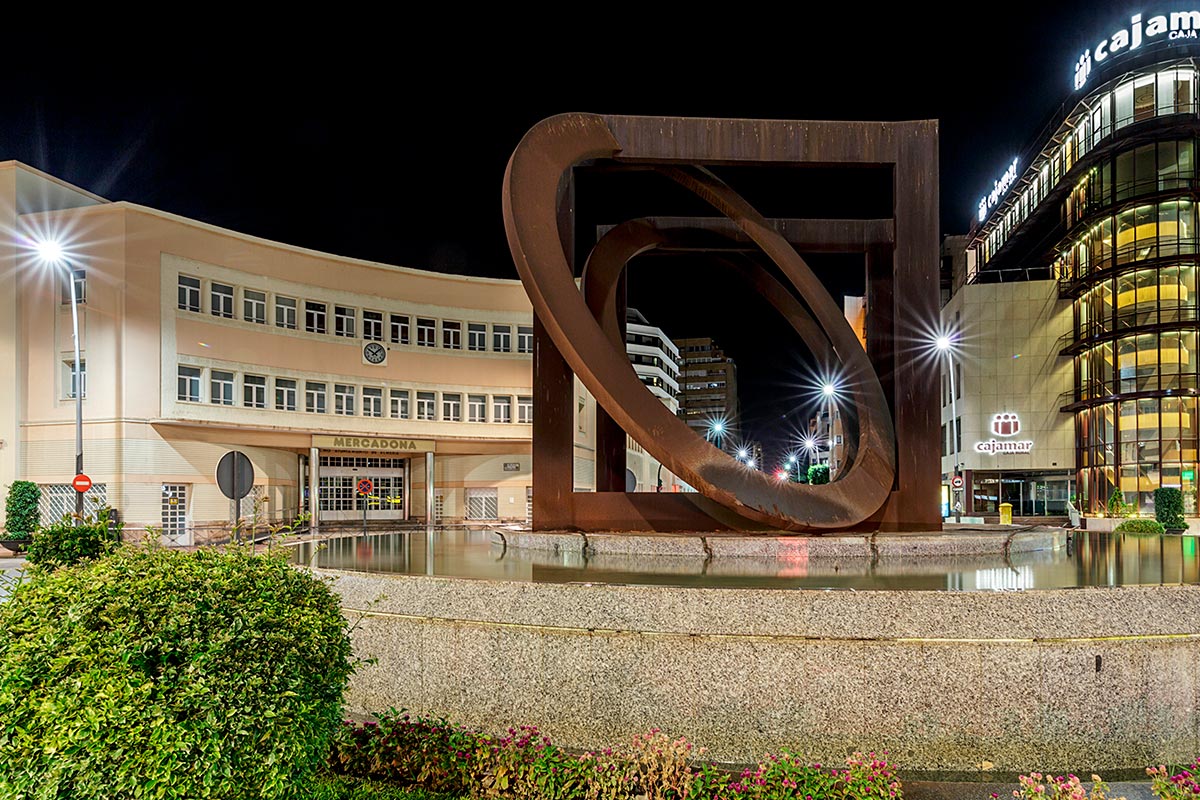
Old Bus Station
The station was built in 1952, according to project architect Guillermo Langle Rubio.
Its construction was necessary in the city because the few existing railway communications determined that communication with the people of the province and neighboring capital will be made by road.
The building represents a prototype of almeriense architectural rationalism, which links to the functional models of the Second Republic developed by Guillermo Langle in our city, such as the building of the local police in Street Santos Zarate. Its pavilion facade, with continuous window standardized forming long friezes, with cantilevered entrance canopy and free piles at the entrance, along with the concave shape used to fit the chamfer Plaza de Barcelona, which contrasts with the rounded shapes of the lateral bodies in the entry hall of the station, endow it with such creative freedom to the point of being declared by the Board of Andalusia of Cultural Interest.
Address: Barcelona square.
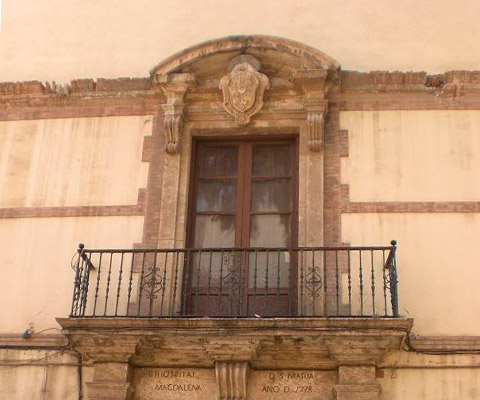
MUREC
The current Provincial Hospital is one of the oldest buildings preserved until today. It is built on the initiative of Bishop Fray Diego Fernandez de Villalán between 1547 and 1557, taking part in the works Juan de Orea. In the late eighteenth century, its administration, until then controlled by the Church, is replaced by a Governing Board composed of ecclesiastical and civil authorities. On the occasion of the creation of this Board in 1777, some major works are carried out in the building. The courtyard, built in the sixteenth century, rebuilt on the occasion of the works undertaken in the Hospital in the late eighteenth century.
The building highlights its main facade on Hospital Street, a neoclassical door built in 1778. This, is framed between two large Ionic pilasters that support an architrave, frieze, and cornice where an inscription with the name of the hospital and the date. The crown topped a balcony in a curved pediment in the centre of the royal coat of arms is housed. The entire set shows a taste academic transition from Baroque to Neoclassicism.
Address: Hospital Street, 04002 Almería
Phone: 619 103 222
Schedule Monuments
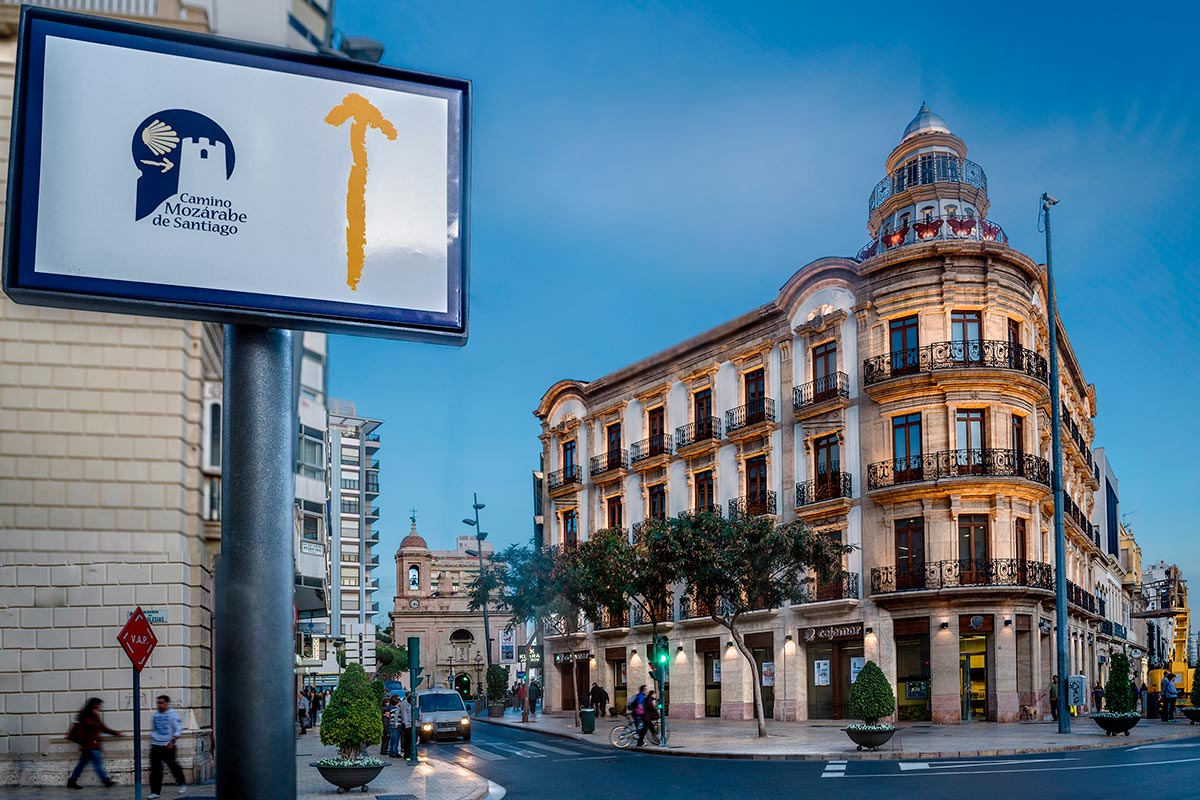
Mozárabe Route
1353 kilometres walking from one end of the Iberian Peninsula, joining Almeria Cathedral with Santiago de Compostela. Two constructions very different but driven towards one end result: unite the cultural, tourist, social and religious sentiment of two very different citie as is this Mozarabic Santiago.
The maximum diagonal of the Iberian Peninsula offers pilgrims a perfect setting in which sub-desert landscapes are mixed with the green meadows and riverbanks and in which the story looks to show the splendor of the past.
ALMERÍA, the Roman Portus Magnus, over the centuries has come to form the Mariyat Bayyana (watchtower Bayana), in the place where the anchorage and watchtower of this then Muslim city were located, a few kilometres upstream of the river Andarax in the vicinity of the current populations of El Chuche and Pechina.
Over time, Bayyana fell into decline whilst the importance of Al-Mariyat grew, until in 955 Abderrahman III ordered a wall to be built around it and for the construction of the Alcazaba and Mosque, currently Iglesia San Juan (St John Church). As time passed the old small settlement, which took on the mantle of the Medina, was born as the definitive city of Almeria, incorporated into the Crown of Castile in 1489.
With its newly pedestrianized streets of the historic centre we can enjoy beautiful walks that allow us to reconnect with the neighbourhoods of the past, its heirs, and then main streets that remain, such as the Alcazaba fortress, the Church of San Juan, the Cathedral-fortress, the Old Square or the English Cable structure, along with many other interesting items.
Originally the Road, the route follows the sequence of the valleys of the rivers Andarax and Nacimiento to Guadix and Granada along the ancient Romans and Muslims roads. Pilgrims start in our capital at the Road and discover the beautiful corners that the historic centre offers, along with the rich cuisine.
For sure this cultural route, beyond the religious beliefs of each, will help us meet the depths of our being, alone or with those closest to us to also come into contact with countless people of the Road, people and and experience that will surely will help us overcome our challenge.
We invite you to discover the Mozárabe Road that connects the city with Santiago de Compostela. One more way to see the city and another way to approach our land and enjoy the Almeriense hospitality, touring the footsteps of our past, through its cultural and historical heritage, its cinematic past, its gastronomy or amongst the outstanding nature of the Natural Park Cabo de Gata-Nijar.

Gateway of Purchena
Today, this is a square located in the centre of Almeria city. Pechina Gateway was the most important gateway to the city. But its name was altered after the conquest of the Catholic Monarchs, who mistook Pechina with Purchena. The gateway disappeared after the demolition of the wall in 1855, around the time of the creation of the square. Since the second half of the nineteenth century and early twentieth century with the “boom” of the mining experiment within the province, the square and its surroundings were proliferated by all kinds of bourgeois and palatial houses.
The square was declared a Historic momument in 1991.
This urbanisation is located in the current Plaza Manuel Pérez García and there are numerous points of interest that are accessible from this emblematic square of the city: the Arab Cisterns, the Butterfly House, the Street of Shops and the Refuge of the Civil War and the Nicolas Salmeron statue are some of the points closest to the point of confluence of the city.
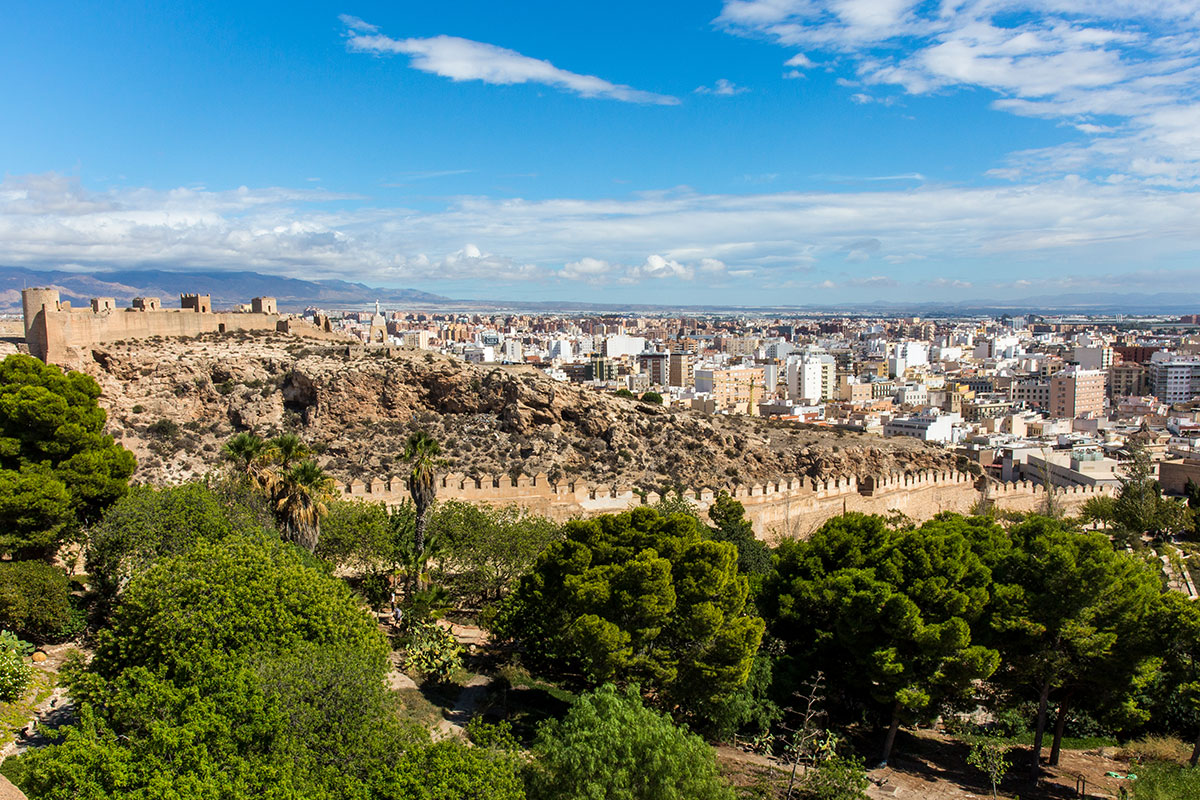
Jayrán Wall and Cerro San Cristobal Hill
From the Alcazaba, descend in a northward direction through the Barranco de la Hoya, a line of wall that reaches San Cristobal Hill, built during the time of King Jairán (1012-1028) in the eleventh century. Here are the remnants of the neighbourhood “amurallamiento musalla”, which descends from the hill via the main street Antonio Vico.
On the hill, known in Muslim times as Monte Laham, there are seven towers, three square Muslim towers and four semicircular Christian towers. These were built by the Templars of Alfonso VII, who constructed a strong-chapel following the Christian conquest of the city under the command of the troops of Alfonso VII in 1147.
On this hill, which has an impressive view of the city, and located on a large pedestal, is the image of the Sacred Heart of Jesus, constructed of local Macael marble. It was restored in 2000 and it is said to bless the city and the Mediterranean Sea. It was originally built in the twentieth century (around 1930).
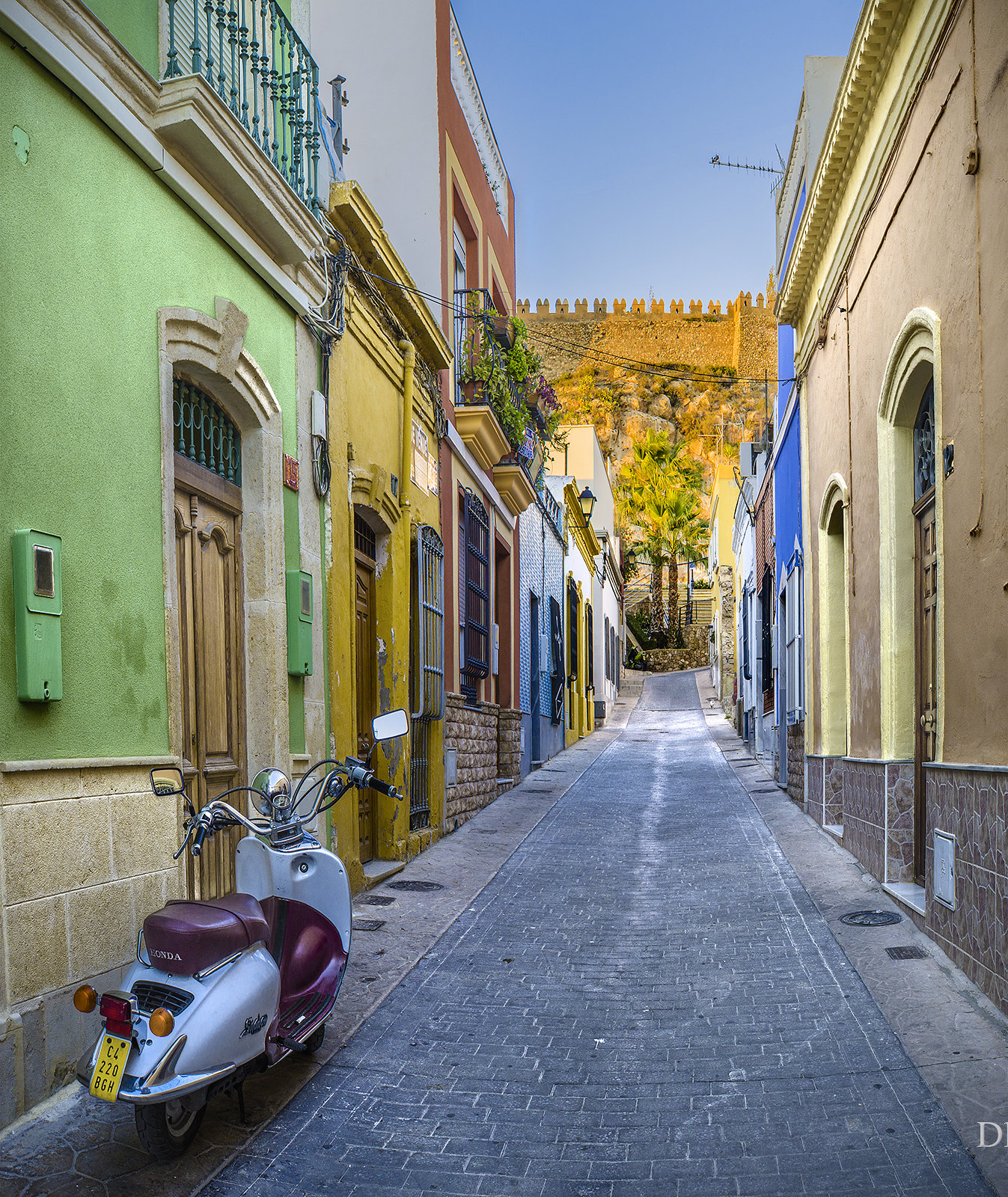
The Medina (Walled Town)
This is the original centre of the city. Abderramán III, Almería founded in 955 (10th century), by constructing a wall around the heart of the town, building a fortress to defend the city, and provide a mosque for prayer.
It extended from the Avenue of the Sea to Queen Street. The route crossed diagonally from the main gateway (at the beginning of Queen Street ) to Sortida or Socorro (at Socorro Street), pssing through Pechina or Real de la Almedina street, which were within the preserved route of Caliphate medina.
Other principal streets lead from the streets of Cruces Bajas, Santa Maria, San Anton and San Juan. In these main roads with a minimum width (not exceeding 3 m), some even more narrow, winding side streets were created, which in turn divided into branches of alleys through corners and ends (like the one located in the Santa Maria street).
This area can be best described as streets and alleys, where there were no free spaces for squares nor little squares. The squares are found around the Great Mosque, whereas the shopping district was formed for alhóndigas, souks and bazaars. Within here the Alcaicería (luxury shopping district) stood. The shipyard, located in the area of the current Atarazanas street, occupied an important space at the south-eastern tip of the medina. There were many neighbourhoods around this area, each with its small mosque, as in the case of existing in the current Hermitage of San Antón.
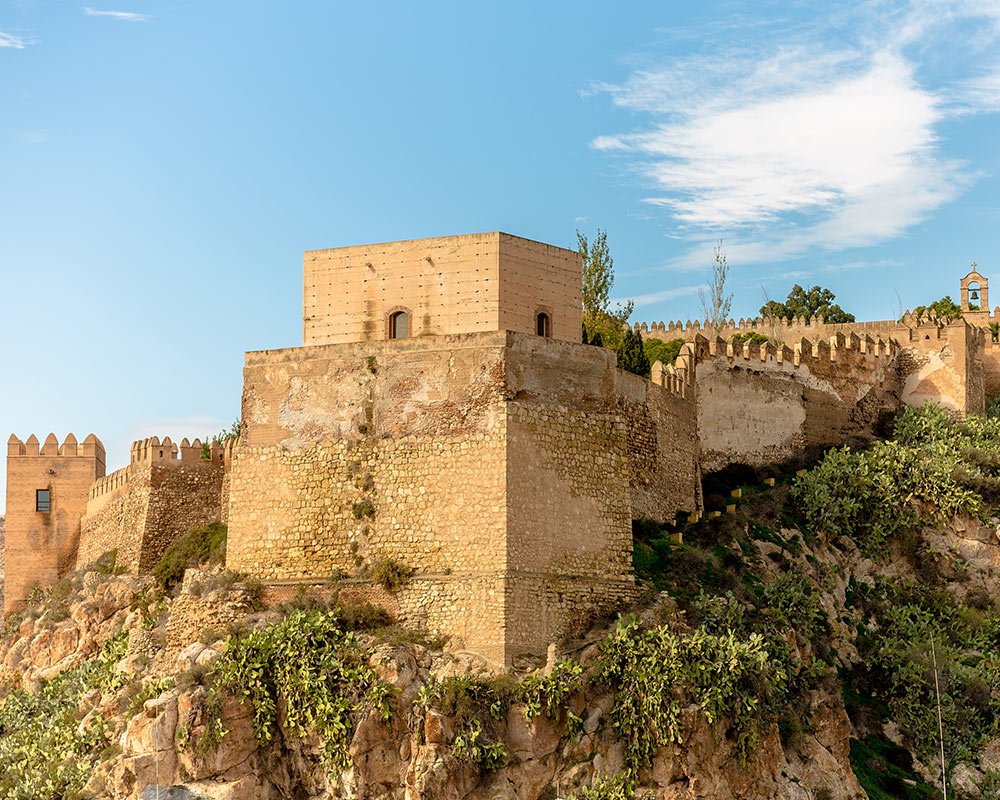
The Alcazaba Fortress
The Alcazaba, with its 1430 m. walled perimeter is Spain’s second largest Muslim construction, after the Alhambra Palace in Granada. It was built at the behest of Abderrahman III in the tenth century after the founding of the city. It is a stronghold which housed three campuses; the first two Muslims and one Christian, last built after the conquest of the city by the Catholic Monarchs, which occurred in 1489.
The fortress is situated on a hill, overlooking the old centre of the city, the medina. In it we find a first enclosure where there is a large garden and ponds constructed during the Muslim period.
The second area, the vast palatial residence of King Almotacín, stood during eleventh century. This consisted of a public area, where today are the caliphate wells of the tenth century, a Christian arch of the 16th century. Located in the residence of the first Christian governor of the city are two rebuilt houses, the Mudejar hermitage of San Juan, and a bathhouse rebuilt, amongst other buildings. In addition, the Government House or Palace reception area was located in the middle. At the top was the private area of the palace of King Almotacín. From this palace only remnants of private bathrooms and the only wall were left standing and which have been preserved, called “Mirador or Window of the Odalisque.” This contains a curious legend concerning the love affair between a Christian prisoner captive and favored slave of the king.
Finally, is the last enclosure of the fortress, Christian, and ordered to be built by the Catholic Monarchs, after the taking of the city. It is a Christian castle within the Muslim fortification. It is situated in a large courtyard, with three towers features: Keep, the Noria used for raising water and the Gunpowder store.
Address: C/Almanzor s/n. 04002 Almería.
Phone: 950 801 008
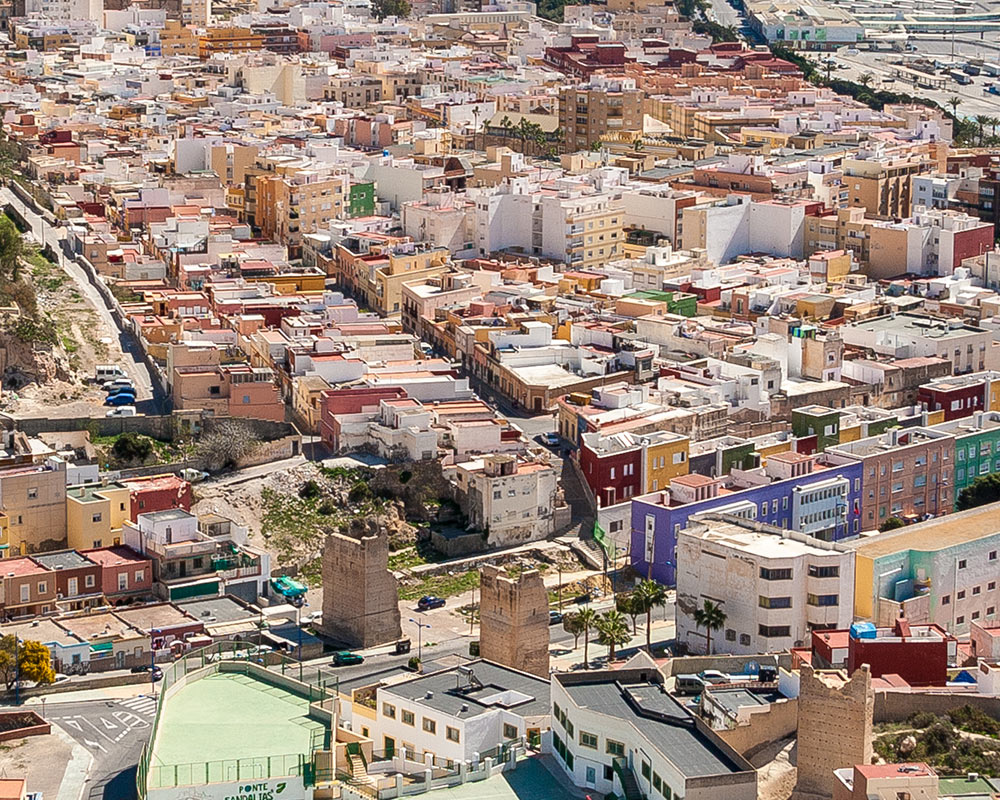
The Aljibe Neighbourhood (Al-Hawd)
This quarter, currently Pescadería-La Chanca, was the old Muslim quarter Al-Hawd, which means “water tank”. this name is given by the existence of a well in that period. The neighbourhood, stretched from the Avenida del Mar to the Barranco del Caballar, bringing together fishermen, sailors and merchants from the west point.
The neighbourhood Chanca, was developed from 1850, and the name means “place or store trap” where fishermen keep their gear and prepare them for fishing. In this neighborhood was the Jewish quarter, near the church of San Roque, until the expulsion of the Jews in 1492. According to Idrisi, was densely populated and well equipped with bathrooms, shops and inns.
This neighbourhood has formidable viewpoints of the city: The so-called “Barranco de Greppi” and the “Cerrillo del Hambre” can be accessed by the Cara street, one of the most typical streets, as is that of the Old Hospice.
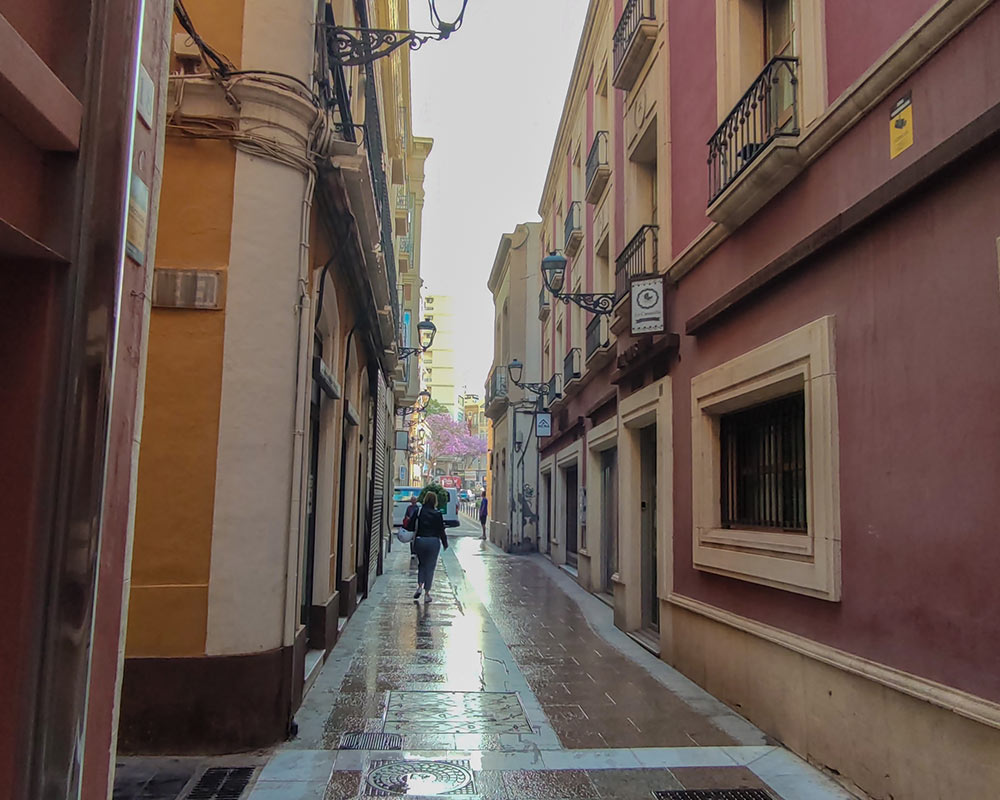
Las Tiendas Street (Street of shops)
This Arabic street originates from a second Jewish quarter that arose around the 11th Century outside the walls of the Muslim Medina. The shopping street connects the Puerta Purchena with the Convent of the Bright and the Plaza de la Constitution. Narrow, pedestrian, named after the businesses it houses.