



Costacabana
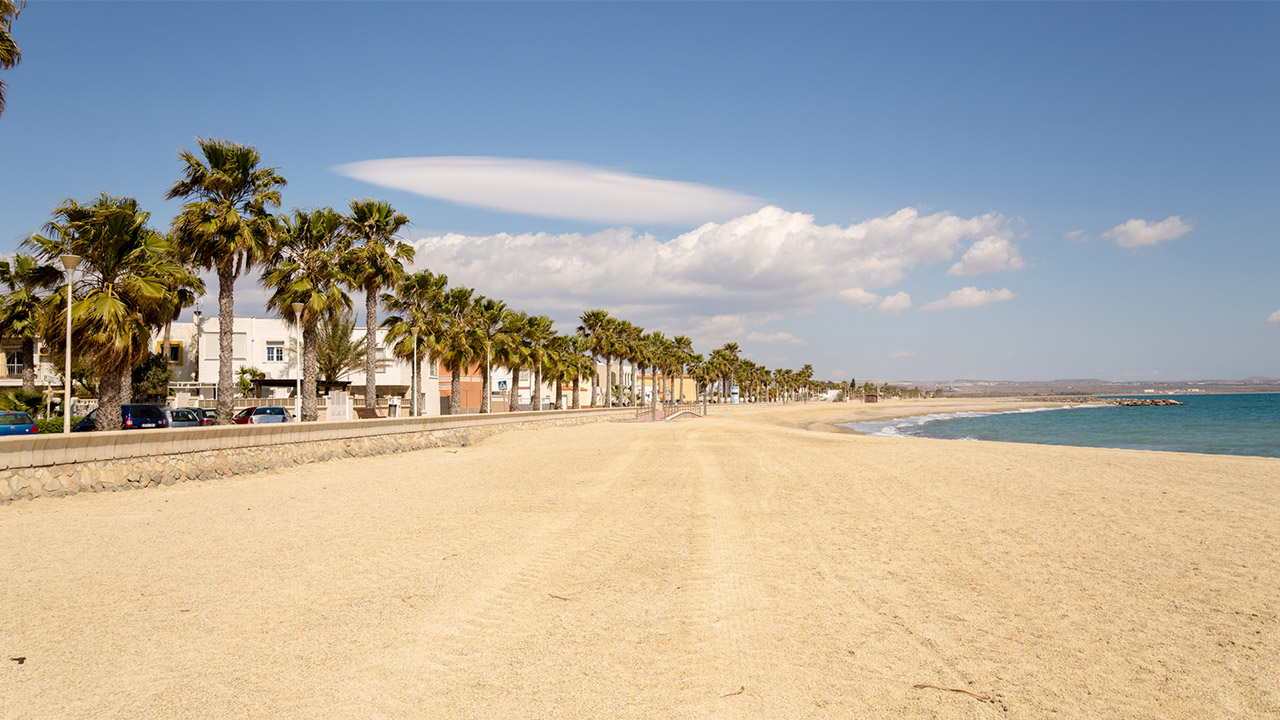
Costacabana Beach is located near the seafront in the residential area of the same name. It is a beach of sand and small pebbles of 1,200 metres in length. It has some stone jetties that protect the coast from waves.
It can be reached Costacabana Beach departing from the Almeria coast in the east, by the extension of the promenade, also called Camino de la Ribera. After passing by the University of Almeria, we get to this neighbourhood.
It has all the amenities including disabled access, showers and dining areas.
New Almería
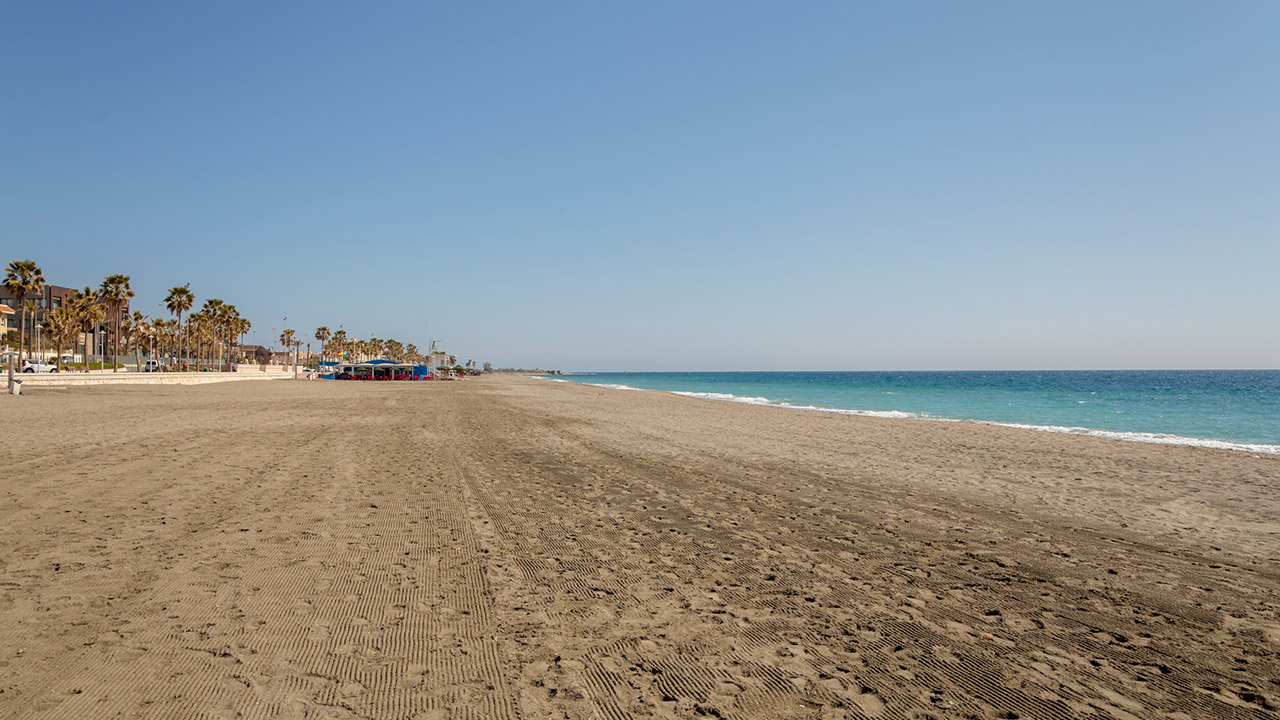
La playa de Nueva Almería, o también llamada la Térmica, es la segunda playa más importante de la ciudad. Es una prolongación de la playa del Zapillo desde la zona del Auditorio Maestro Padilla en dirección este. Tiene unos 1.500 metros de longitud con una anchura de unos 40 metros compuesta de arena.
Discurre junto a la segunda fase del paseo marítimo de la ciudad con acceso para personas con discapacidad, carril bici, duchas, áreas comerciales y de restauración.
El nivel de ocupación durante todo el año y en especial en los meses de primavera y verano es alto.
Las Olas
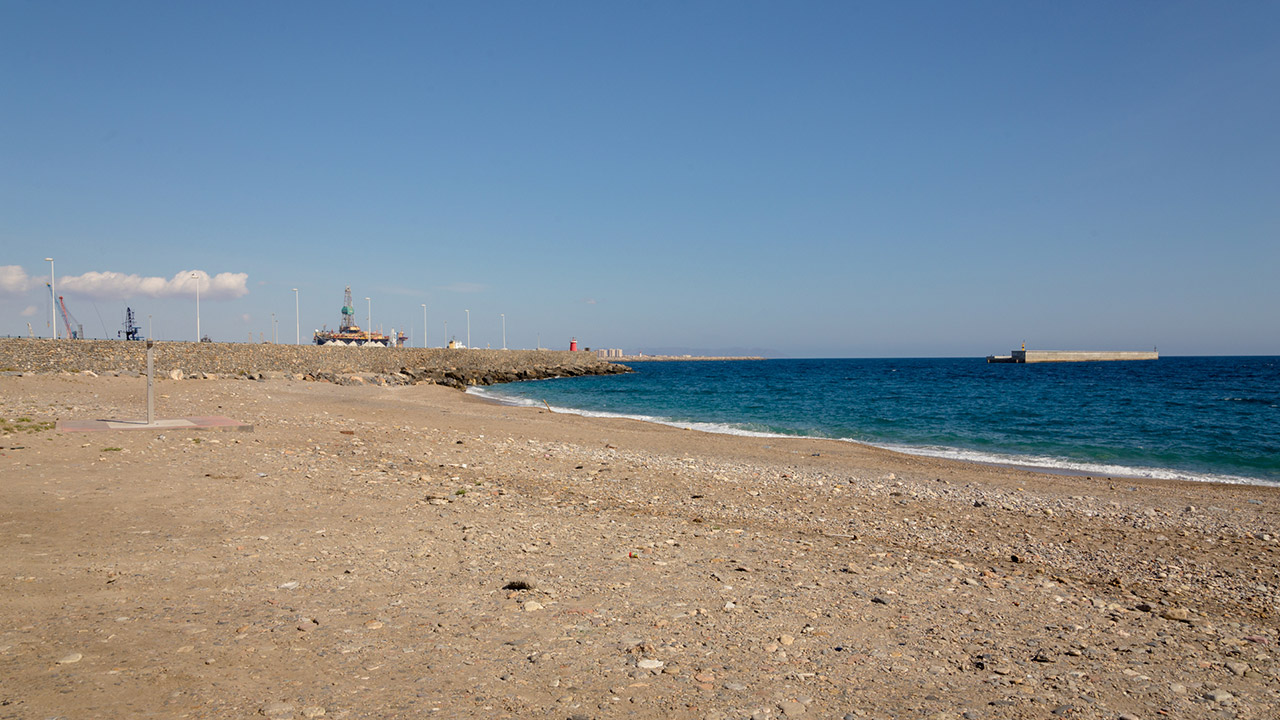
Las Olas Beach can be considered semi-urban, because although it is out of the city, after the Bayana tunnel, it can be considered part of the fishing port of the city.
It has just over 200 metres long, sand and stone.
To access this beach you have to leave town towards Aguadulce (west) and make Roundabout service area Bayana again towards Almería and exit right before re-entering the tunnel.
The beach has access via a ramp for people with disabilities and shower.
San Telmo
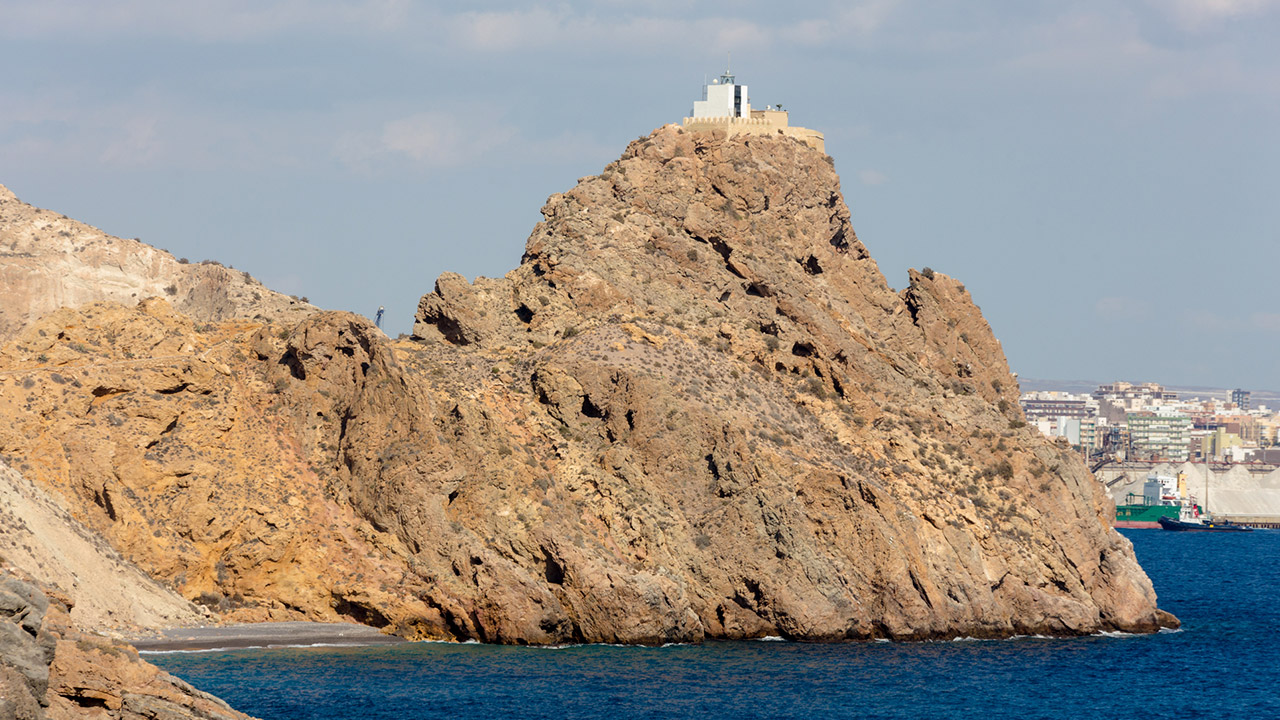
Playa del Faro de San Telmo, is a beautiful sandy cove located between cliffs. It is located at the westwards exit of the city of Almeria. It is less than 100 metres long and has low occupancy throughout the year, having a complicated access. One must park in the nearby service area (Bayana) and walk to the Aguadulce road. From there you can see below a steep embankment; care the decent can be dangerous.
The beach lacks services.
Garrofa
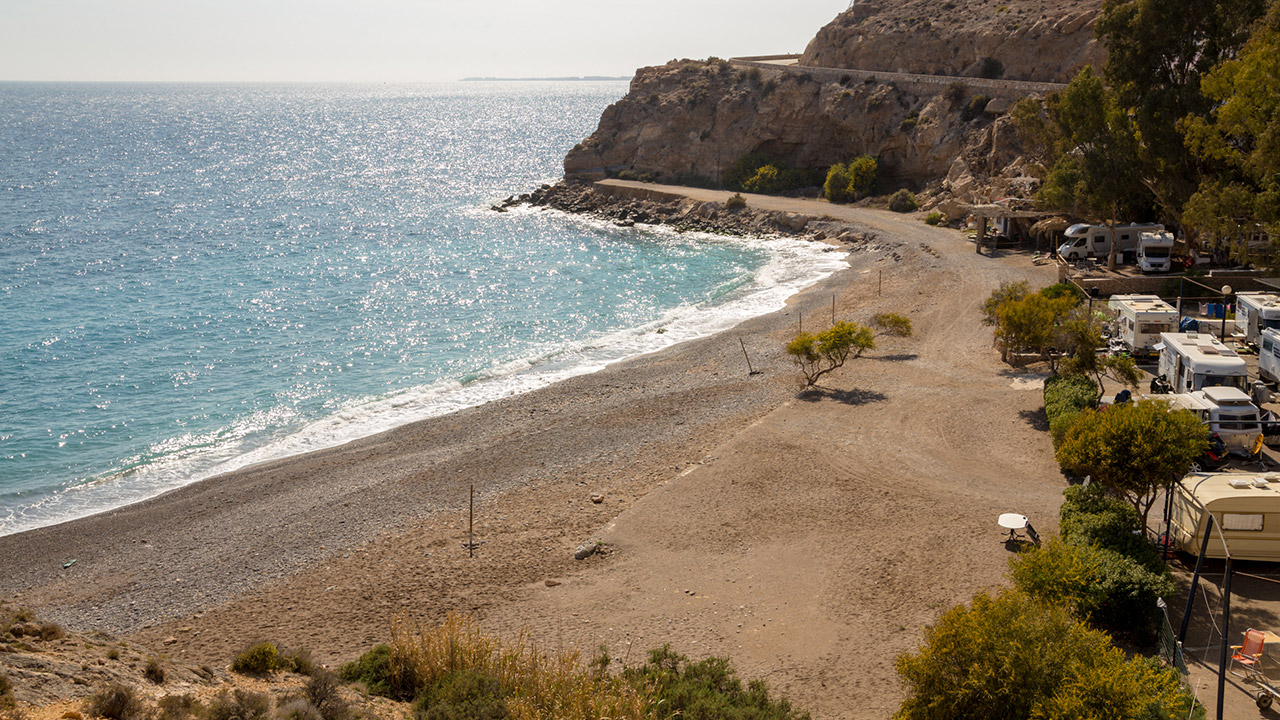
Garrofa beach is the last on the westward coast of the city of Almeria.
It is a cove of just over 100 metres long pebbled with a normally clear water. It is located between cliffs and next to the camping of the same name, through which one must pass to access the beach.
This beach has a diving club and own camping facilities that are prepared for both tents and caravans.
Apollo theater
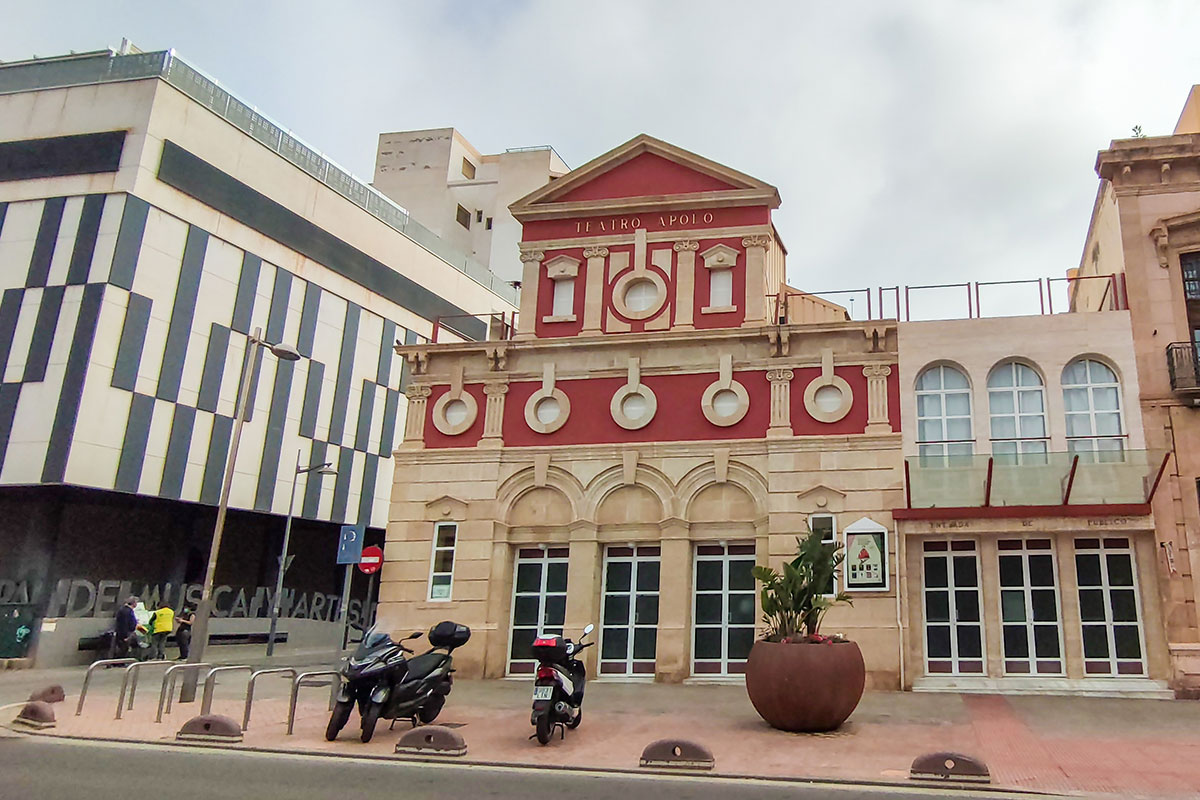
There is no record of the date of the project or the name of the architect author. The only data found in the municipal archives and collected by the historian Emilio Villanueva (“Urbanism and Architecture in Modern Almería”) are proof that the new Apollo Theatre was built in 1881 on the site that had previously occupied the Teatro Calderón . At a time abounding recreational societies was one of them, the Society of Twenty, who promoted its construction becoming the first owner of the theater.
In January 1984, the Directorate General of Architecture and Housing, Ministry of Public Works, Transport and Environment, commissioned the architect Angel Jaramillo Esteban, performing some previous studies for the rehabilitation of the building, and then in 1985 the corresponding project .The works managed by the Hon. Almería City Council, beginning in 1987 under the direction of the same architect and then for various reasons remain stalled between 1989 and 1992, were completed in 1993, having taken part in financing the ministries of Public Works, Transport and Environment and Culture and the Departments of Public Works and Transport and Culture and the Environment of the Junta de Andalucía
Address: Rambla Obispo Orberá, 25. 04001 Almería.
Cervantes Theatre
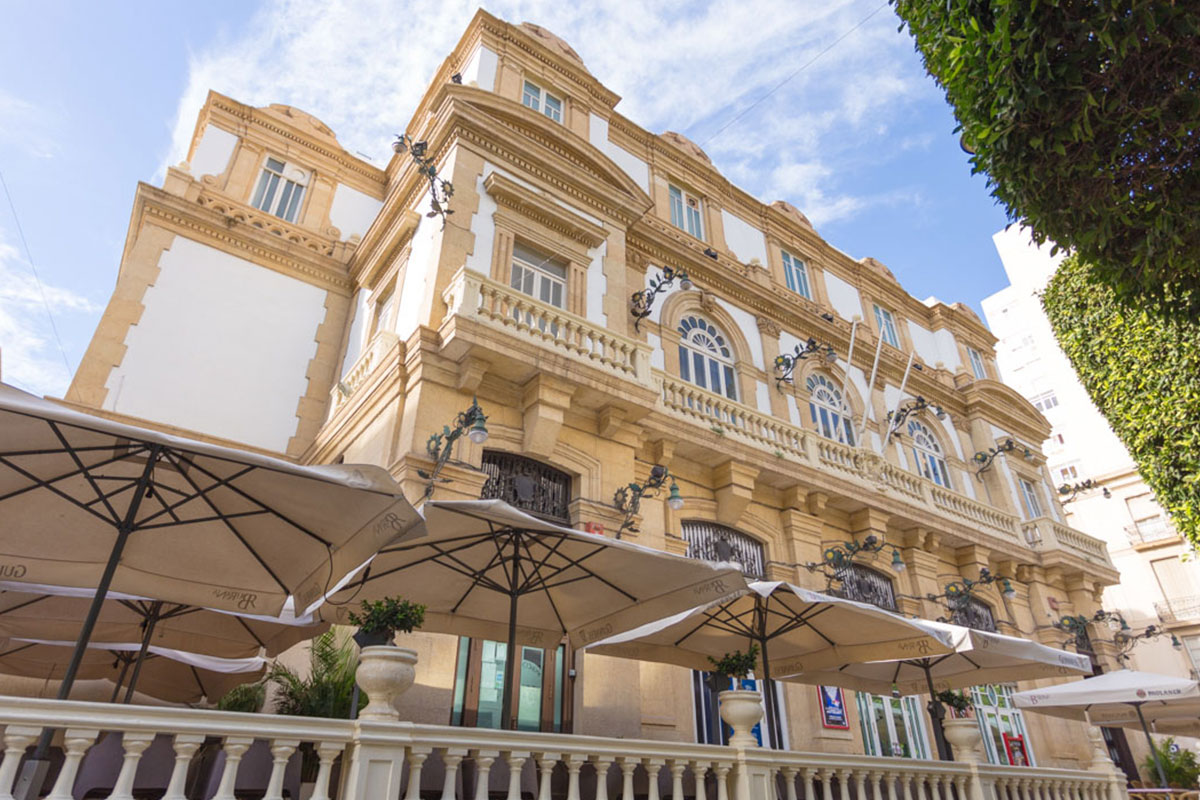
The Cervantes Theatre is a historic almeriense theater, whose construction will extend from 1886 to 1921. The typology of the theater follows the design of Italian Theatres, with the stalls horseshoe. Since its birth was the epicenter of the Almeria culture.
Access to the Teatro Cervantes was originally made for the facade of the Paseo, where now the Mercantile Circle is located.
Known for the events that occurred during the performance of “Santa Isabel de Ceres” being killed Conchita Robles. Our theater is not only this, always have regarding harboring song, dance, opera, zarzuela, traviata, plays and many kinds of shows for all audiences.
Dirección: Calle del Poeta Villaespesa, 1. 04001 Almería.
The Central Market
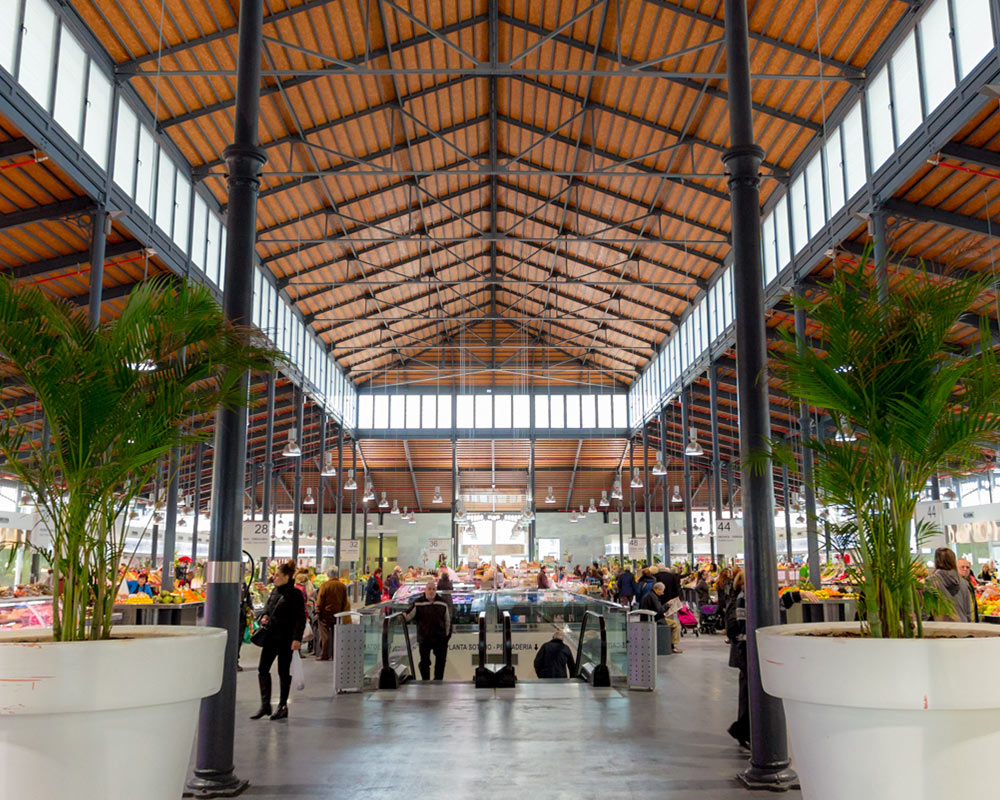
The project to construct a building for public market in Almería is old, initially being thought in the construction of a market in the center of the old town, thus protecting which was celebrated in the Plaza of the Constitution at the beginning of the decade 1840.
The appearance in the second half of the nineteenth of a bourgeois expansion to the east of the city, cornered build projects in the old town, prospering the idea of placing it in the area of residence of the local bourgeoisie.
Thus, in the extension of Paseo project, designed by architect Jose Marin Baldo in 1860, he was reserved in the center of widening lift, a plot for the construction of a public market and fishmonger. Since then, some projects do not come to fruition until the project works to Trinidad Cuartara Cassinello was awarded in 1892, succeed.
Its location was the most suitable, near the confluence of two major thoroughfares of bourgeois expansion, Bishop Street Orberá and Paseo open to it through a street that for this purpose projected (street Aguilar de Campo) at the bottom of the main facade it would stand.
The market has been preserved virtually intact to this day. In 1982 he carried out a major restoration. Construction, which is included within the Iron Architecture, became almost whole of this material, except the basement and the flag of the main facade rose with masonry factory, brick and stone. The armor covers is metallic and the closure of the facings made from blinds and windows. On the home front, the street Aguilar de Campo, is represented the symbol of abundance, a female figure with a basket of fruit.
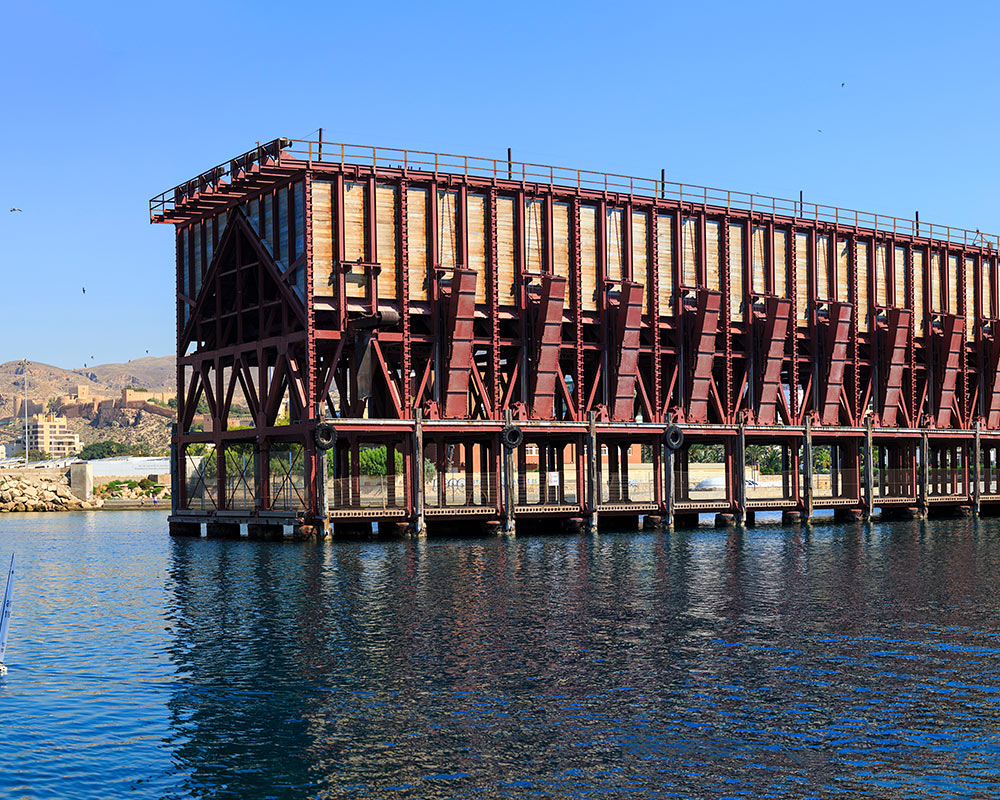
The English Cable Structure
The mineral loading, called “English Cable”, is located in the Playa de las Almadrabillas, dockside lift and the terminal of a branch of the railway. It was originally owned by British mining company “The Alquife Mines Railway Limited” (hence its name), which won the concession in 1901, immediately undertaking the construction in 1902.
It is an example and a masterpiece of iron architecture of the early twentieth century. Its construction is possible due to the construction of the port and railway, moving its construction in the current eclectic but introducing a new architectural language characterized by the use of new materials, such as iron. Its surroundings form the beach and a bridge link with the railway station.
It consists of two parts: access linking the railway station with the landing, and the pier itself through which the trains could unload directly into the hold of the ships. Your access begins at the terminal of the railway, whose middle section rests in large arches on pillars of stone, separated by metal sections based on large iron beams. In 1998 he was declared of cultural interest for its historical, symbolic and aesthetic values.
Address: Playa de las Almadrabillas, s / n. 04001 Almería.
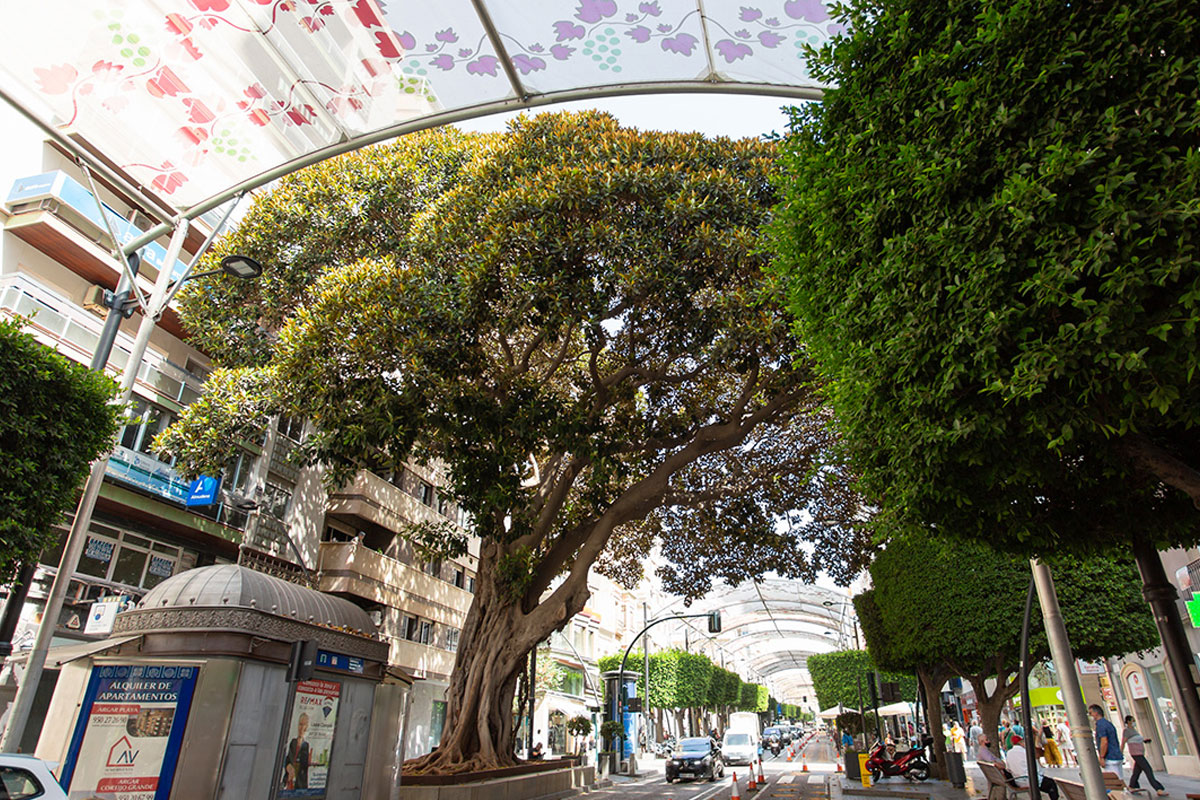
Puerta de Purchena and Paseo de Almería
All the planning of the expansion of the Puerta de Purchena and Paseo de Almería took place in the mid-nineteenth century. The Puerta de Purchena, the nerve center of the city, was located specifically at the confluence of the current Plaza del Carmen and Plaza de Manuel Perez Garcia. Former “Puerta de Pechina”, the main entrance to the city that connected with the way of Pechina. Christians mistakenly known as Puerta de Purchena. It was demolished, like most of the walls in 1855. The door, shortcut, was framed by two towers in slope at the base.
Paseo de Almeria, along with the Puerta de Purchena, is today a meeting point of Almeria facing the commercial visit, business management in cafes around, or just a morning walk space. If initially the door was a space outside the walls, it will become the occasion of urban development in the second half of the nineteenth century, centerpiece of the urban fabric.
In the bourgeois widening lift in the second half of the nineteenth century, and after the demolition of the walls, the Paseo and the Puerta de Purchena become the prime area of the city, being connected urban development of the city in this period under the mining and trade of grapes that enriches the bourgeoisie.
Along the Paseo and the Puerta de Purchena you can see examples of houses of the bourgeoisie Almeria late nineteenth century and early twentieth century. This is single family or multi-family housing, among which the “Butterfly House” in the heart of the Puerta Purchena. This house is known for “House of Rapallo” by one of its owners or “Butterflies” by the most striking decorative motif presented. It was designed by the municipal architect Trinidad Cuartara Casinello.