




Sacred Heart of Jesus
This image was erected in the 30s of last century on the highest point of Cerro San Cristobal. The original work disappeared during the Civil War.
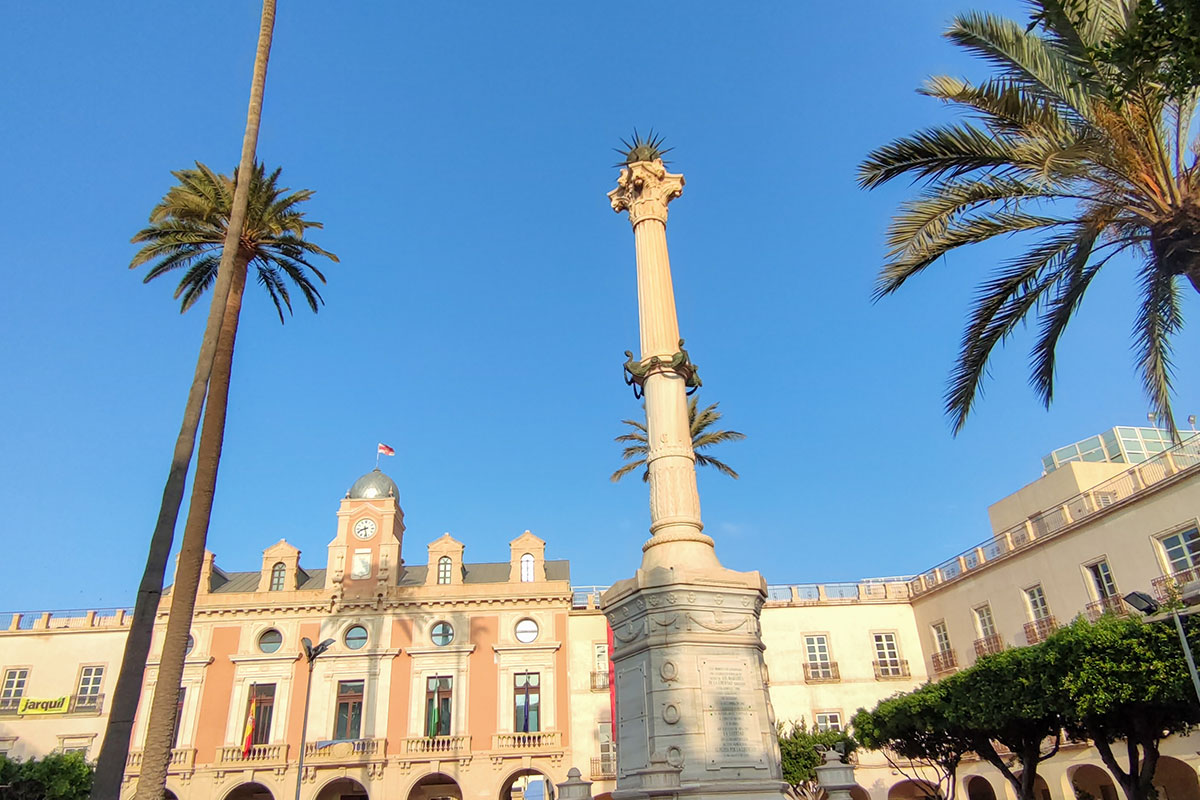
Monument to the martyrs of freedom
Expedition of “Coloraos”, so called by the tone of their coats, was an attempt to Spanish liberal insurrection during the Ominous Decade who carried out the liberal émigrés of the Society of the Communards Knights, which operated in Gibraltar after the fall the constitutional regime in 1823.
The Coloraos departed on August 6 from Gibraltar and arrived at Almeria on the fourteenth of the same month and landed forty nine well-armed and uniformed men with their red coats. They intended to raise the almeriense people against the absolutist Fernando VII. The attempt was unsuccessful, as the spies had warned of the invasion. Those who were not killed during the fighting were shot on Aug. 24 without trial, knees and back.
In his memory he rose in Almeria this memorial, the Martyrs of Liberty, but was destroyed in 1943 with the first visit of General Francisco Franco to Almeria and during the dictatorship no tributes were held to these men.
With the advent of democracy recovery prompted tributes and reestablished, traditionally known as “Monument to the Coloraos or Pingurucho”.
It is located in the Plaza de la Constitution.
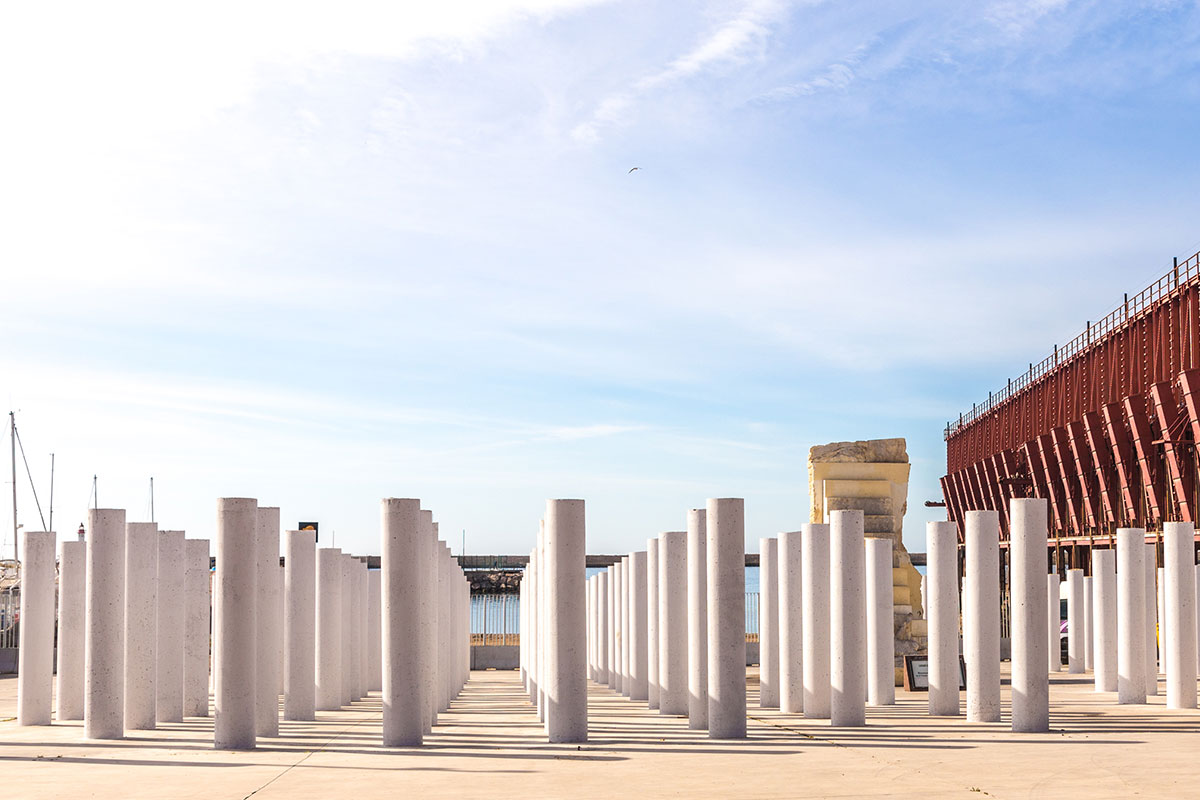
Monument to Tolerance
Together with The English Cable, in the same Almadrabillas Park, the monument dedicated to the victims of the Nazi Holocaust almerienses is erected. It is the work of Almeria Mª Ángeles Lázaro Guil and was inaugurated in 1999 by the last almeriense survivor of the concentration camps, Antonio Muñoz Zamora, who saved his life thanks to another Spanish he wrote in his entry form to the camera gas “exterminated”.
The monument commemorates the 252 almerienses that between 1940 and 1945, were imprisoned in the concentration camps of Mauthausen and Gusen (Austria), and 142 of whom did not survive. This is the same number of columns cement (142) constituting the assembly and surrounding a central part representing forced these almerienses had to perform work.
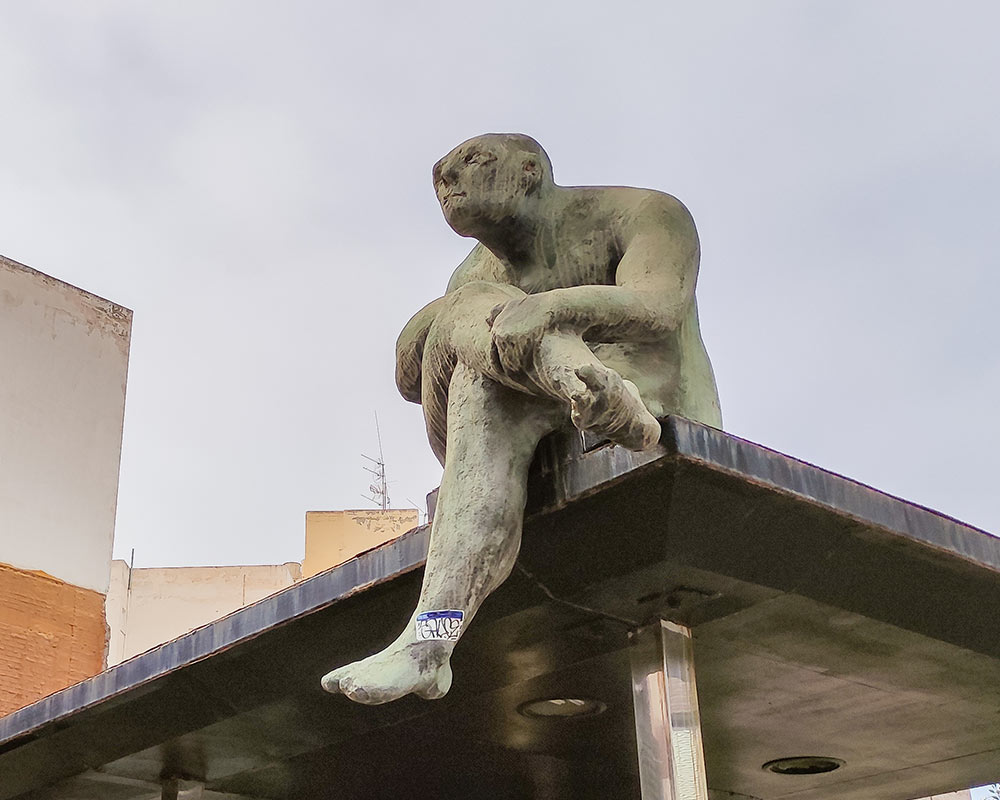
Gargoyles
Sculpture made by Javier Huecas bronze. In front of the Apollo Theater on Avenida Obispo Orberá, these two characters in different lying and sitting poses, observe theater-goers, “look at those who are going to look.” The set is completed by a third character (soon to be installed) that standing, “shout” viewers to the theater entrance.
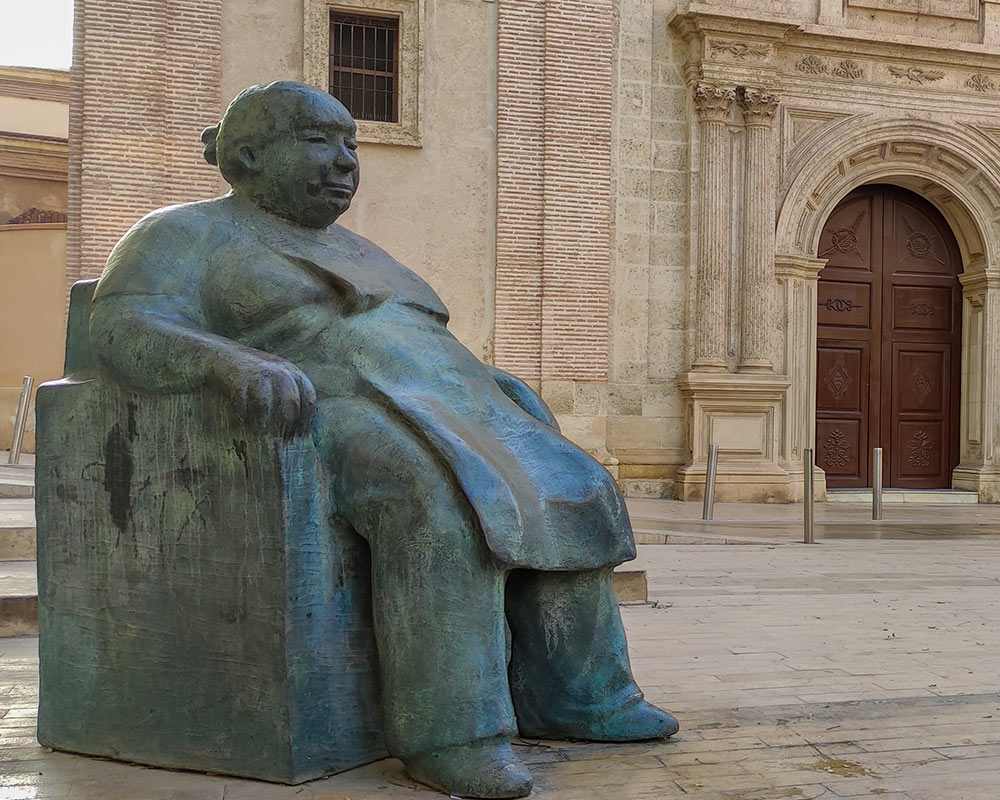
The wait
Bronze sculpture by Javier Huecas, conducted in 2008, which portrays a woman dedicated to housework in an attitude of rest. It is in the Plaza de San Sebastián.
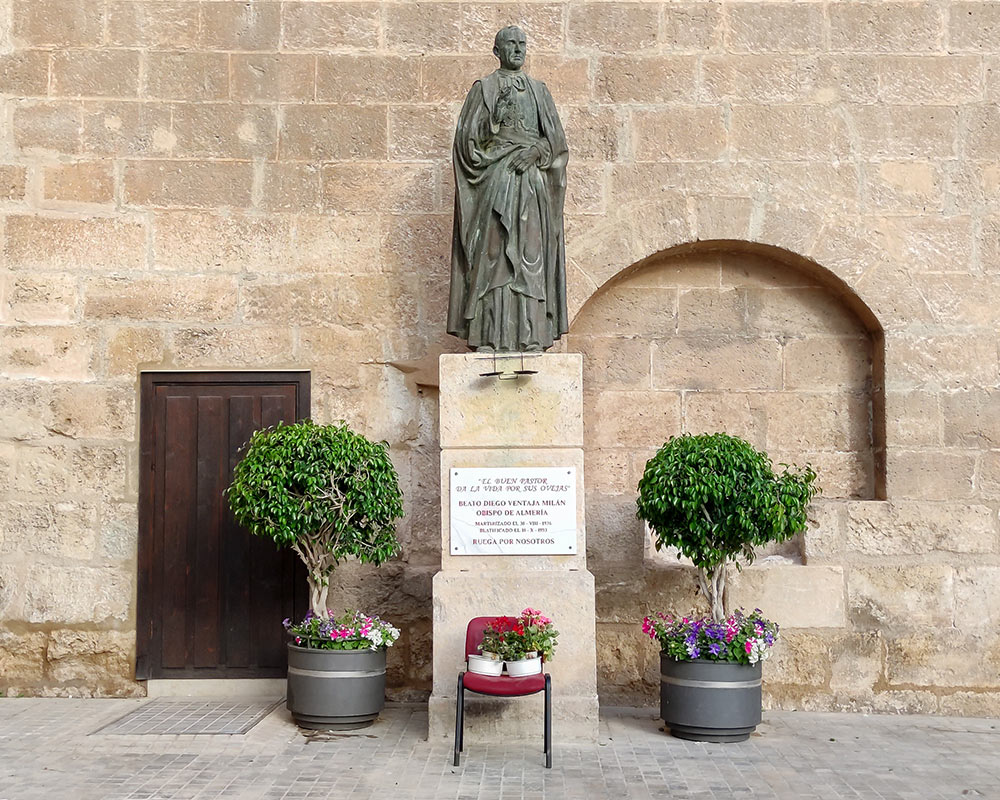
Statue of Blessed Diego Ventaja
Diego Advantage Milan, was a almeriense cleric, who was born in Ohanes and was bishop of the city. He was killed at the beginning of the Spanish Civil War by the Bishop of Guadix, Manuel Medina Olmos. He made his ecclesiastical training in the Sacromonte but culminated in the Gregorian University in Rome where he obtained a doctorate in philosophy and theology.
He was beatified by Pope John Paul II, and the city was performed this work in its report that is in the Cathedral Square, next to the tower Belfry.
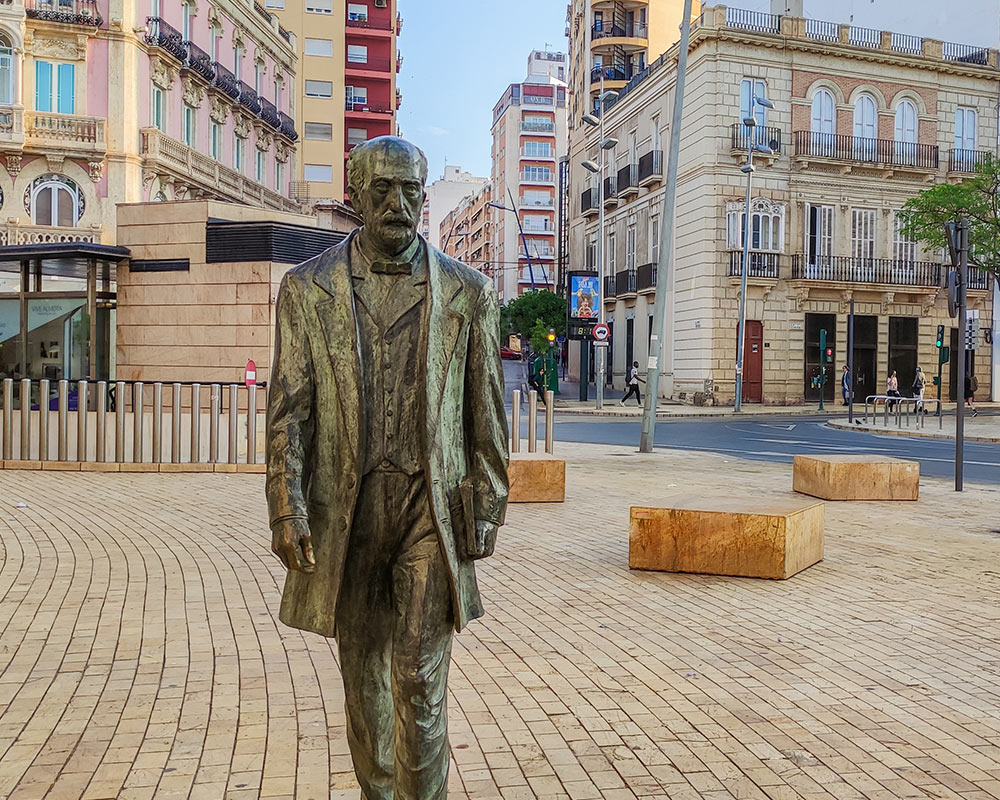
Statue of Nicolas Salmeron
Nicolas Salmeron is undoubtedly one of the most famous people of Almería. It was among other things president of the First Republic. In Almeria he has dedicated the park located near the port of Almeria and this sculpture located in the center of the Puerta de Purchena. It is made of bronze Umérez Lourdes (2005).
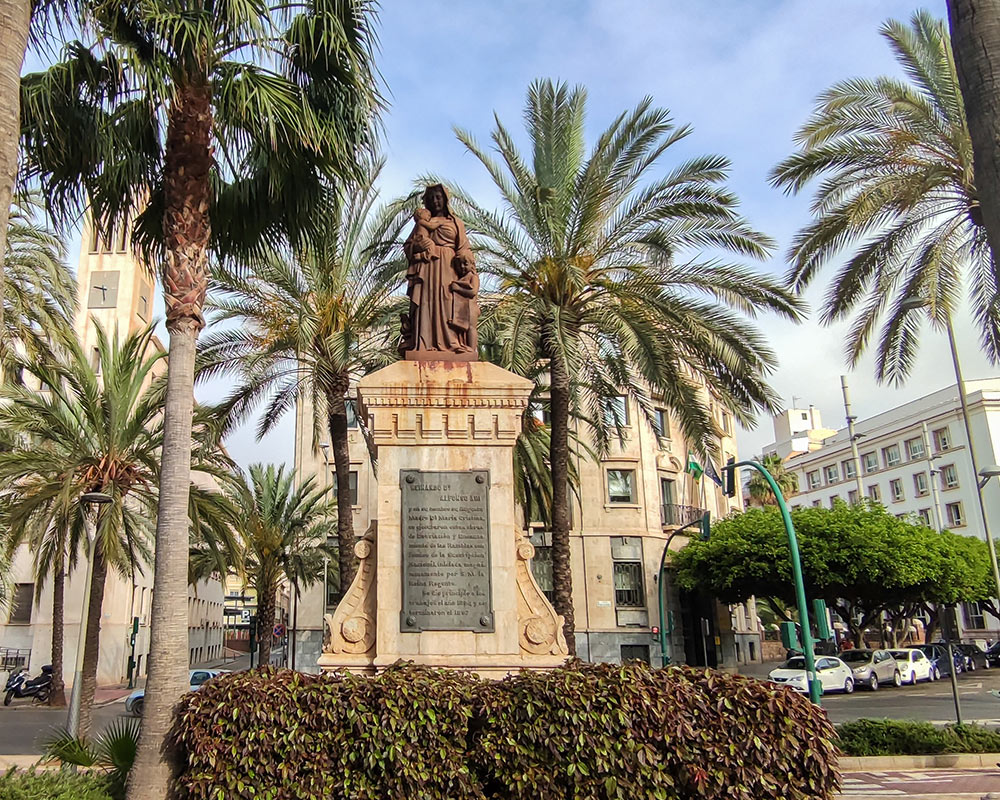
Statue of Charity
The Statue of Universal Charity, known as the “woman with children” or “mother with her children” is a work of Almeria sculptor Luis Fernandez Cortes and is located in the park candles, south end of Avenida de Federico García Lorca, near the old Plaza Circular, the city of Almeria, Andalucia, Spain, built in 1898.
It was the first statue with which featured the city. Its original cost was 5,235 pesetas. About ashlar stonework a figure of iron, Charity or mother holding a child in her arms and another appears clinging to her skirt, carrying in his hand a scroll with the text “1891” is supported.
It was erected in memory of the victims of the floods that hit the city on September 11, 1891, about twenty people, including four children. Shows a woman clutching two children. The cost was borne by initiative of the Queen Regent Maria Cristina of Hapsburg-Lorraine, during the minority of King Alfonso XIII, who made the wadi channel, build homes for the homeless and the neighborhood or walk Charity. In gratitude adjacent street called Reina Regente.
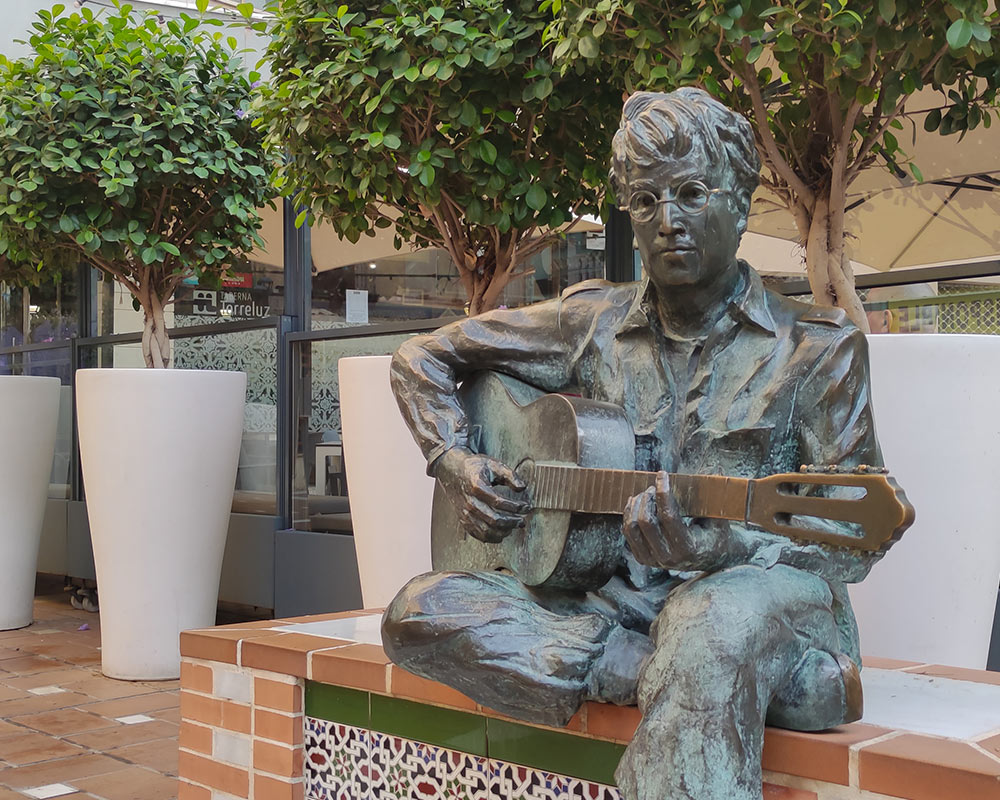
Statue of John Lennon
Component dedicated to The Beatles in memory of their stay in the city of Almeria during the filming of the movie How I Won the War (1966). During his visit, John Lennon lived in the farmhouse Santa Isabel (current House of Cinema), where he wrote Strawberry Fields Forever. The statue, originally installed on Avenida Federico García Lorca, is currently in the Plaza de las Flores, in the historic center of the city.

Statue of Alfredo Kraus
Almeria city stands the statue of “Alfredo Kraus in his sublime creation of Werther” in honor of the master of bel canto pure. “In honor and recognition of universal art. Almería, April 2007 “prays at the base of the sculpture of the canary tenor.
The statue is installed in the square of the capital that bears his name in front of the Municipal Auditorium Maestro Padilla.
It was the first statue erected on the peninsula in memory of Alfredo Kraus, although they have sculpted busts in other cities.
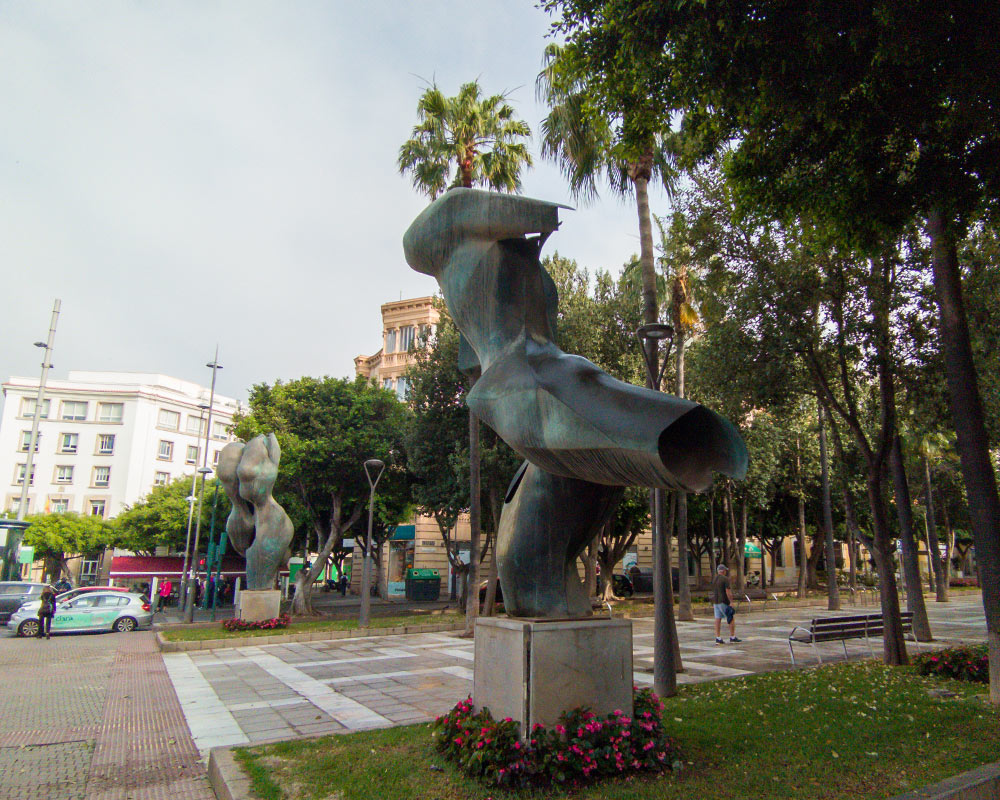
The greeting
The Wave is a sculpture made of sheet by Miguel Moreno (1995) and represents the bodies of a man and a woman. It is in the southern part of the Avenida Federico García Lorca in the city of Almeria.
Miguel Moreno is the last link in the great Mediterranean hierristas. Rewarded, recognized and fully active at maturity, the work of Miguel Moreno goes on in his Casa Taller.
His training as a goldsmith gives his work a unique character, enriching their creations by continuous technical and formal investigations in two forms: sculpture and jewelry. Miguel Moreno has worked marble, stone, ivory, wood, gold, silver, bronze and sheet metal (iron, steel, zinc, aluminum, copper, brass …)