



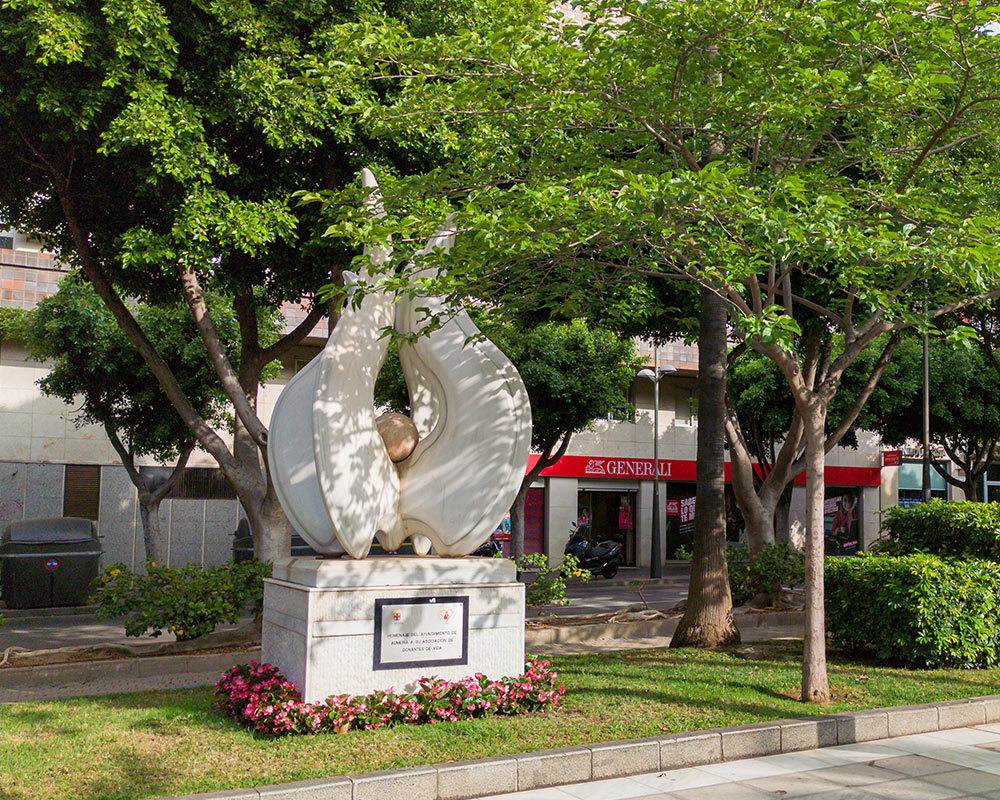
Blood Donors
Marble sculpture representing a drop of blood by Rodrigo Valero (2003). It is on Avenida Federico Garcia Lorca.
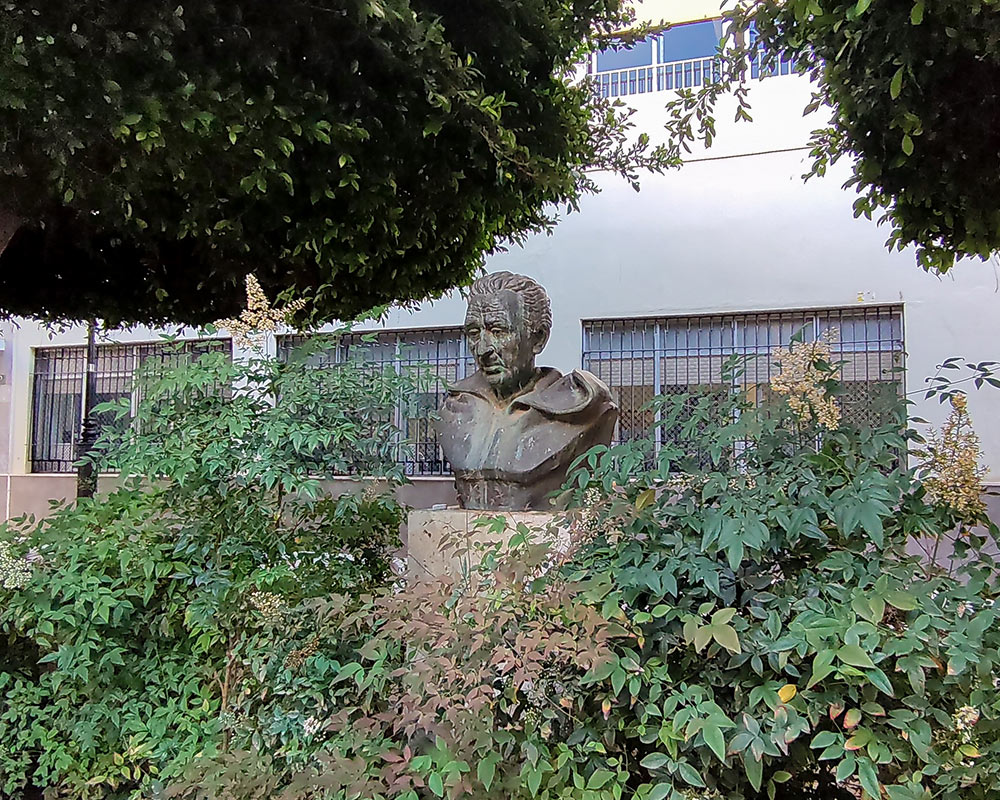
Bust of Father Ballarín
This bust is dedicated to the Father Ballarín, Prior of the Dominicans. Ballarín was seeing the progressive deterioration of the city and thought about how to safeguard all that was in charge. He had a special interest in maintaining the image of our patron saint, the Virgen del Mar, even to replace it to prevent spoilage, what was done with the strictest privacy. This helped keep the image, especially with the events of 1936 in which the temple of the patron suffered several attempts of fire, with the July 23 of that year, when it was burned, leaving converted the ship into a pile of rubble.
To 39 and remained the temple, when a group of 50 almerienses attended by volunteers to the call of the Father Ballarín the debris removal began, but still, the image remained hidden since the shelling intensified in the city and risked It is destroyed.
After the end of the civil war, the voice that nevertheless the image of the Virgin had been saved came, and in April, the image came to light, thanks to the efforts of Father Ballarín among others. In addition, Father promoted the reconstruction and fundraising for the sanctuary.
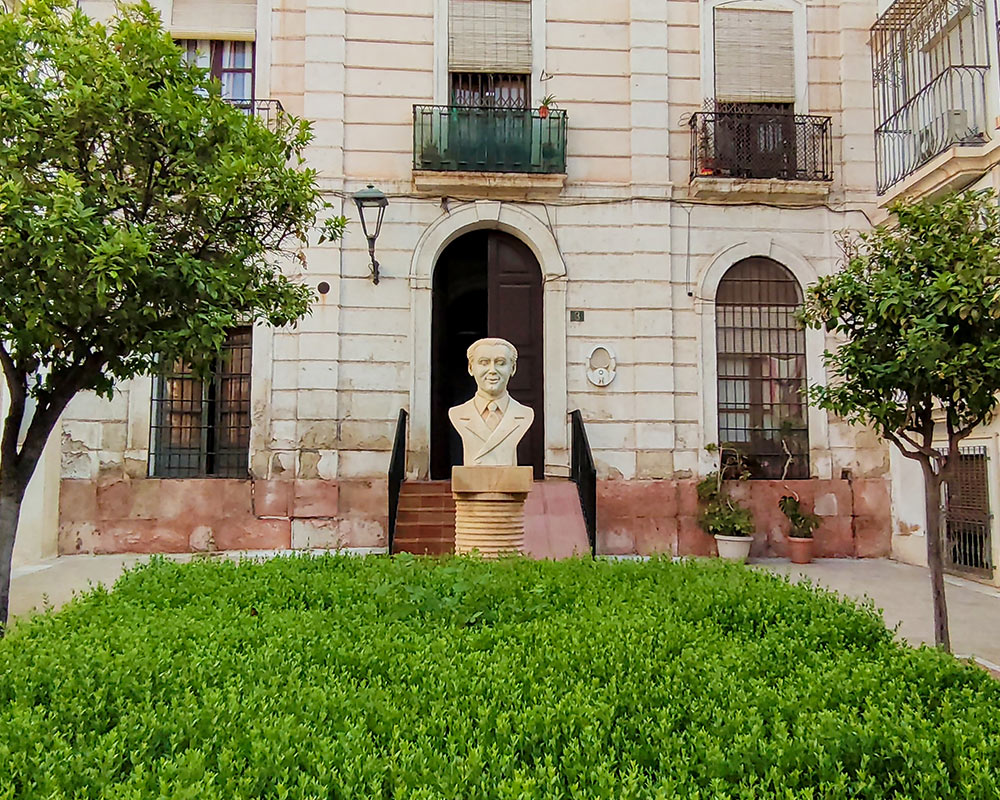
Federico García Lorca bust
Federico Garcia Lorca had more than a casual relationship with Almería. In addition to being the land that inspired him to write the famous “Bodas de Sangre”, also he lived here for three years in his childhood.
Almeria city pays tribute to the “Avenida Federico Garcia Lorca,” better known as “La Rambla” and with this bust is in the Plaza Maestro Rodriguez Espinosa, that it was the master of Lorca during his stay in Almeria 1906 to 1909. In this same Plaza, formerly called Bálmez, is the house where he lived for three years.
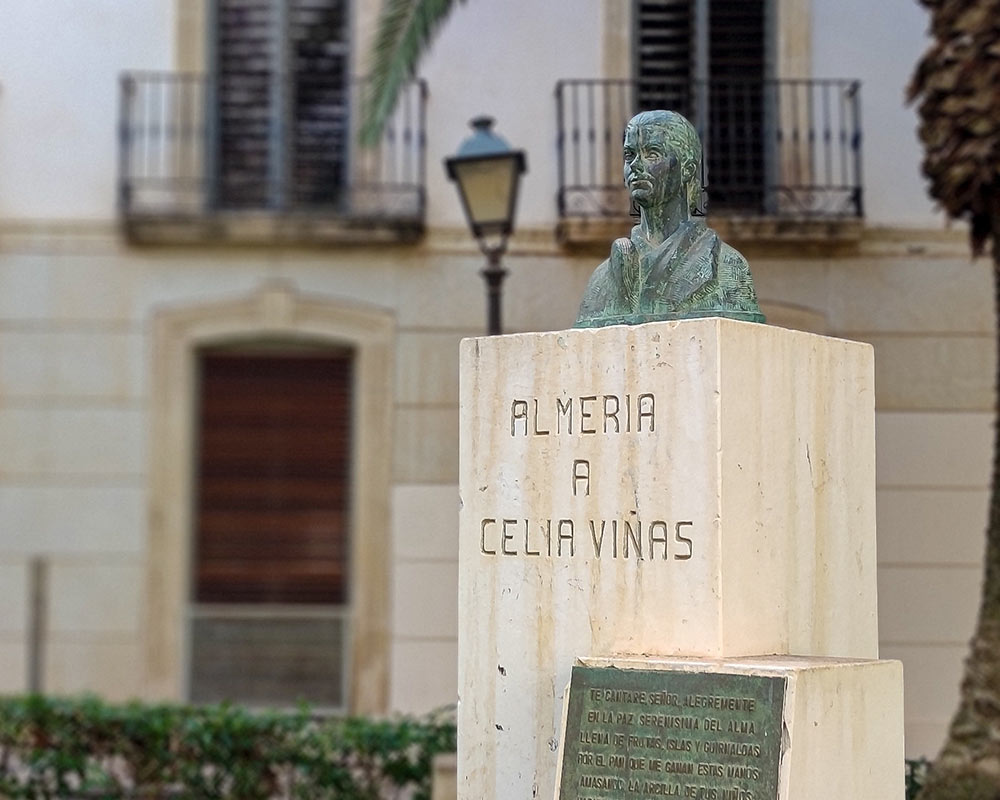
Celia Viñas bust
Since 1984, this sculpture pays homage at the Plaza Bendicho the author Celia Viñas Olivella (Lleida, June 16, 1915 – Almeria, June 21, 1954) who wrote children’s poetry in Castilian and Catalan, with a brief but considered renewing work and key in the panorama of the postwar period. Viñas studied Philology at the University of Barcelona and worked several years as a teacher in Almeria, where he arrived in 1943. Here he married Professor Arturo Medina Almeria and lived very close to its people until his death in 1954.
Bas Relief Valentine
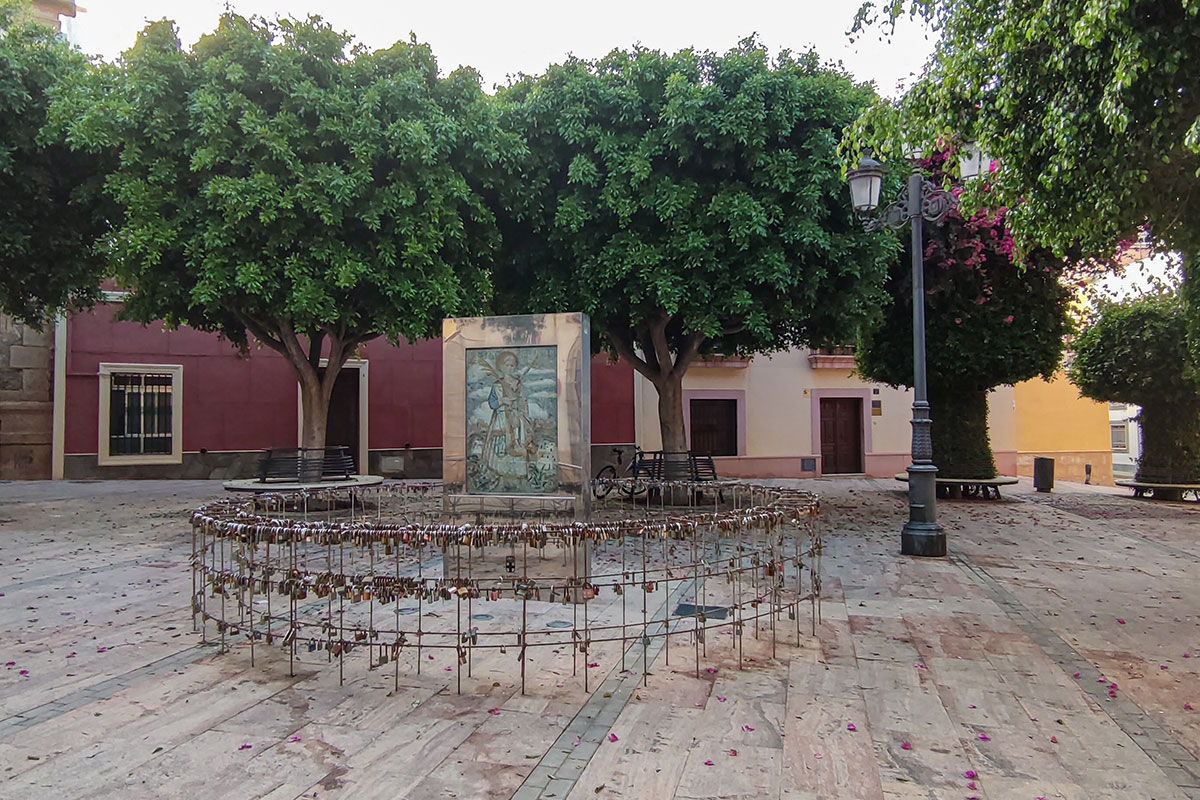
Work done by Jesus de Perceval in the Plaza Campoamor, opposite the Palace of the Marquis de Cabra. It comes in a monolith of Perspex and aluminum that highlights the polychrome stone. On the basis of the work are inscribed some verses of Ramon de Campoamor, author names the square: “It is characteristic of love, if true, to sum up in a being the whole world.” One of the peculiarities of the work is that it is surrounded by a low fence where lovers can hang a closed as a symbol of their relationship padlock.
Almería Educator
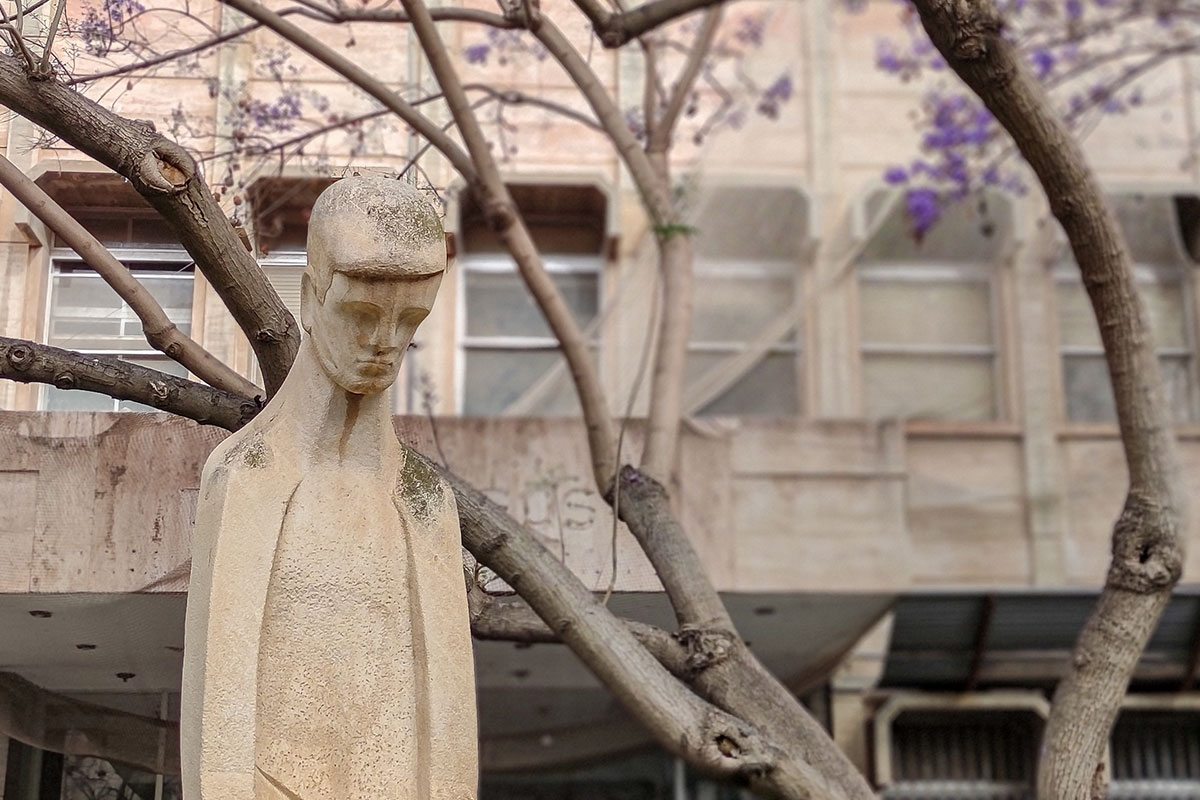
1969 This statue pays tribute to the figure of the teacher imparting knowledge represented by a teacher to his students. It’s in the Plaza Juan Cassinello, also known as Plaza del Educator (opposite the Post Office building).
Jayrán Wall and Cerro San Cristobal Hill
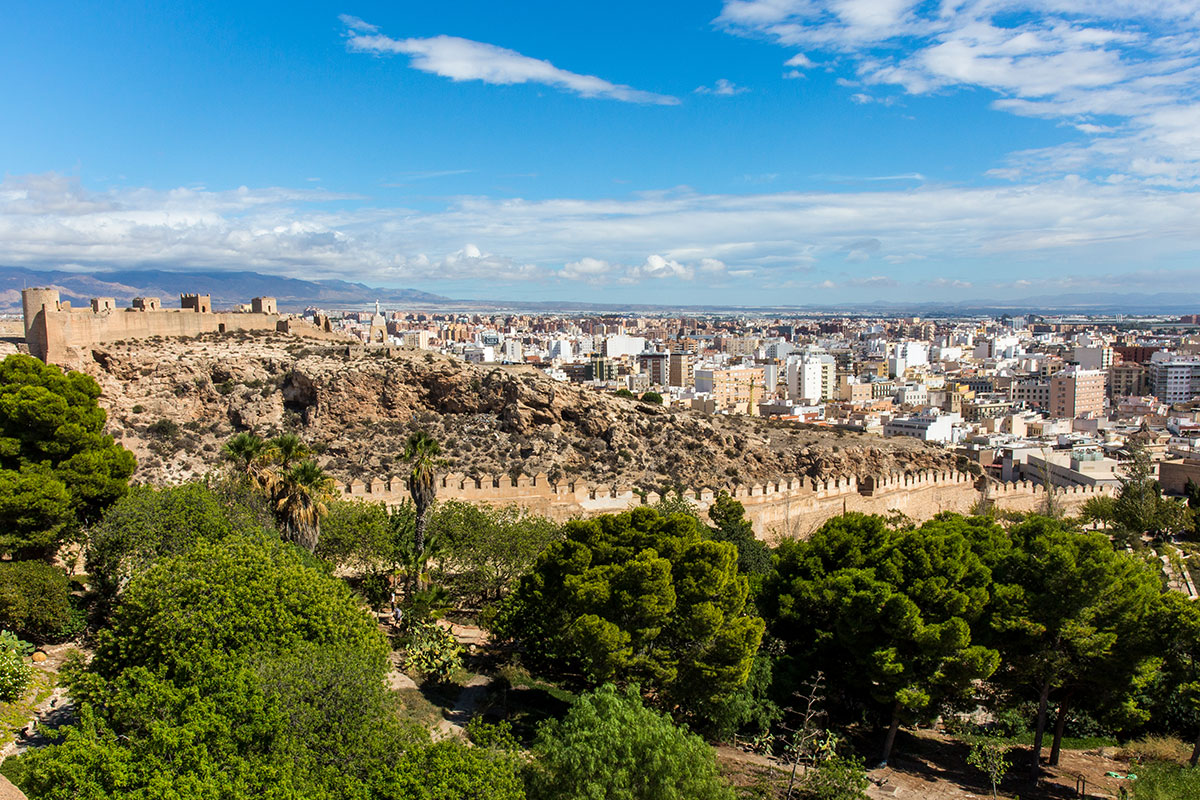
From the Alcazaba, descend in a northward direction through the Barranco de la Hoya, a line of wall that reaches San Cristobal Hill, built during the time of King Jairán (1012-1028) in the eleventh century. Here are the remnants of the neighbourhood “amurallamiento musalla”, which descends from the hill via the main street Antonio Vico.
On the hill, known in Muslim times as Monte Laham, there are seven towers, three square Muslim towers and four semicircular Christian towers. These were built by the Templars of Alfonso VII, who constructed a strong-chapel following the Christian conquest of the city under the command of the troops of Alfonso VII in 1147.
On this hill, which has an impressive view of the city, and located on a large pedestal, is the image of the Sacred Heart of Jesus, constructed of local Macael marble. It was restored in 2000 and it is said to bless the city and the Mediterranean Sea. It was originally built in the twentieth century (around 1930).